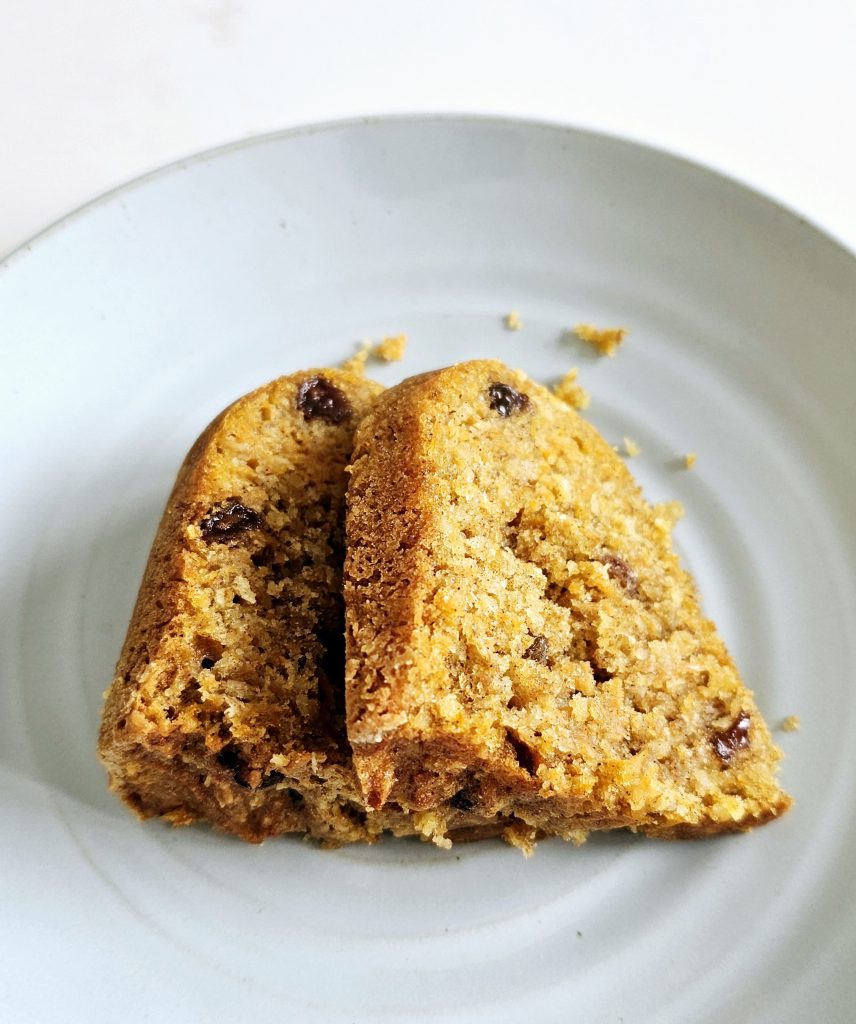
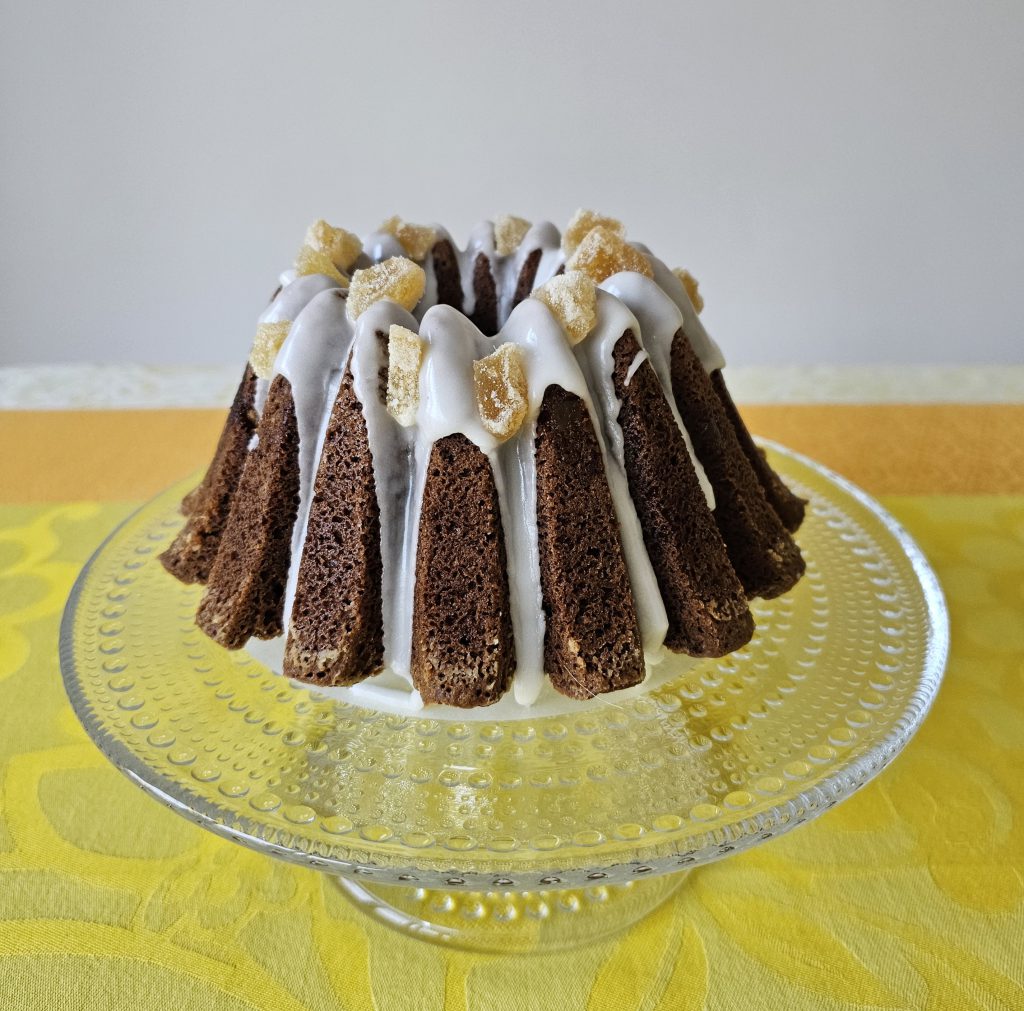
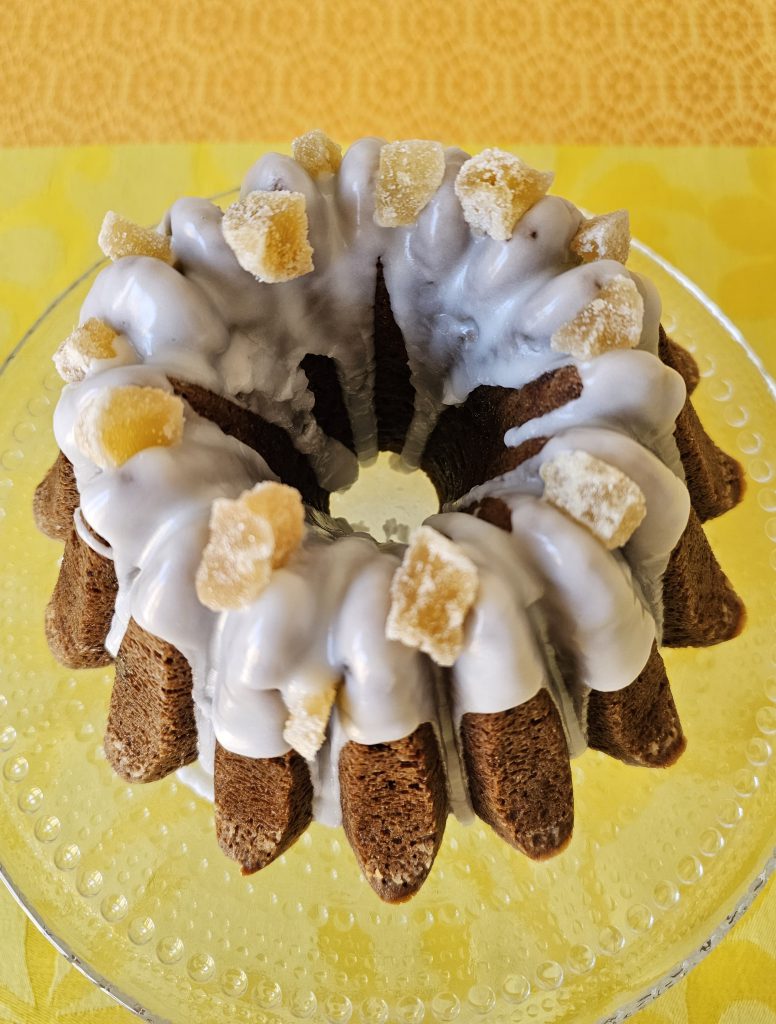
I have been spending my free time clearing up files of unwanted notes and avoiding the still persistent rain here in London. As a reward for accomplishing more or less the daily To Do lists, I make yet another bundt cake. This time it is Nigella Lawson’s Fresh Gingerbread Cake with Lemon Icing (page 236 of How to be a Domestic Goddess). I have said it before and will say it again: baking a cake in a bundt pan makes it so much more attractive and presentable.
The original recipe will fill a 10 cup bundt pan but I wanted to make a smaller one. Much as I hate to mention this in a blog which deals a lot with baking, my doctor said I have to watch my sugar intake as my recent blood tests show that I am in the pre diabetic range. Worry about overworking my pancreas needs to balanced with a healthy eating life. I have been to hospital so many times with friends (and my father) who were dying and who wanted to eat but couldn’t. So I always tell everyone around me: eat when you can and enjoy every bite and every chew.
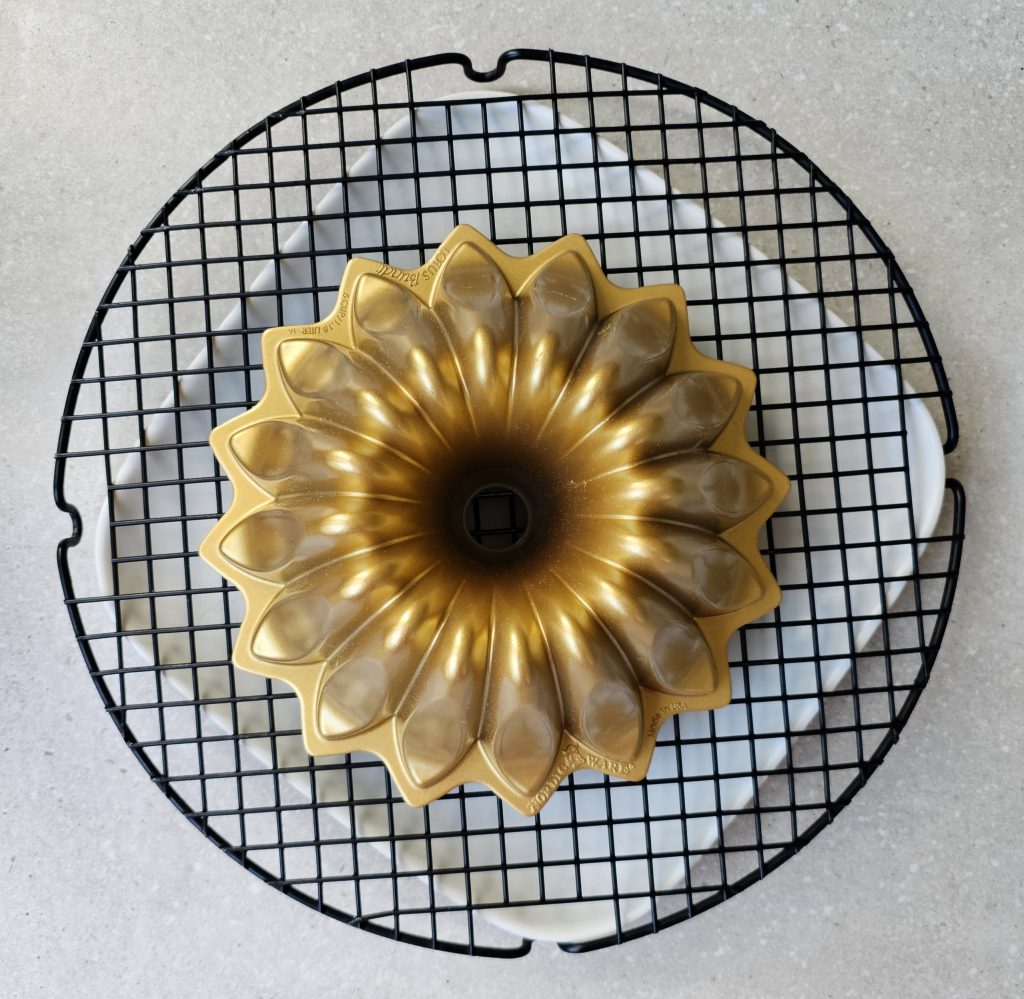
Each time I use my 5 cup lotus bundt pan I think of Singapore, where I bought it. Shamefully I also remember I need to write up some notes about the Botanic Gardens and share a few photos of the city at nighttime. Hopefully sometime this week or next.
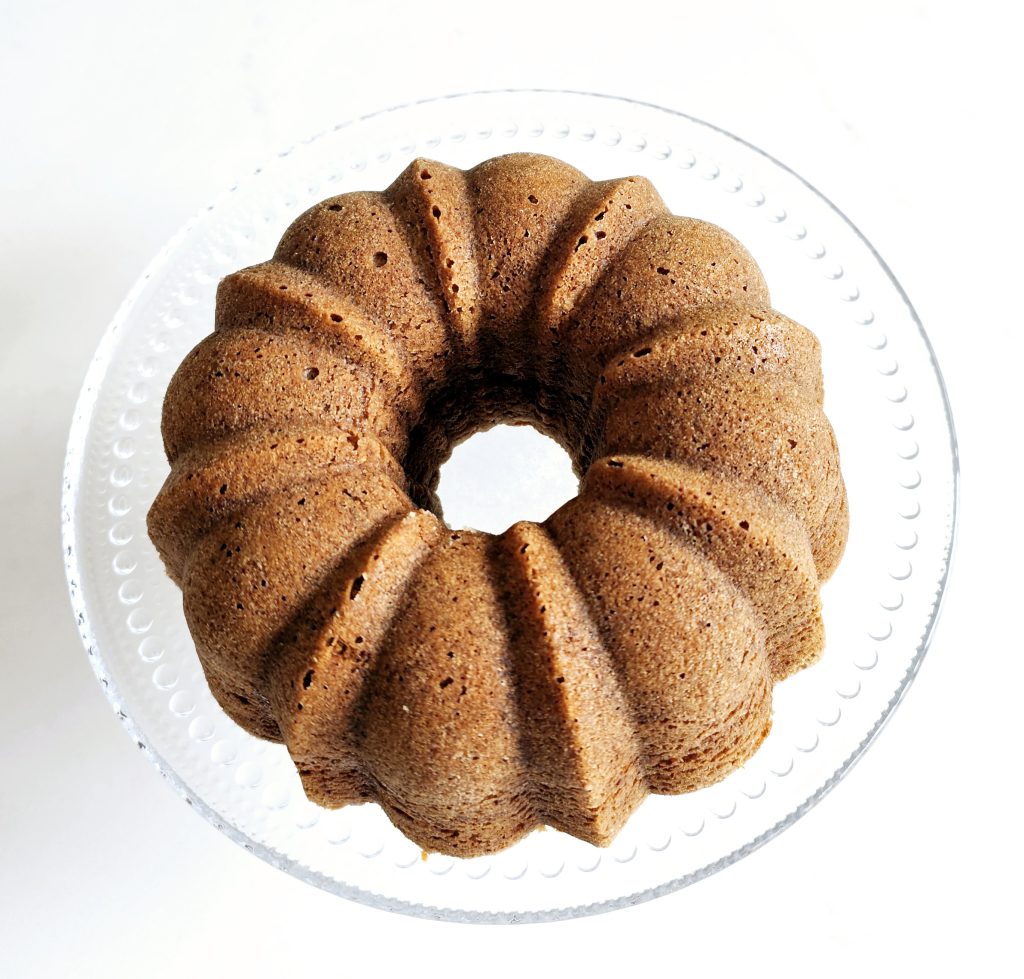
The gingerbread ready to be turned out of the lotus bundt pan
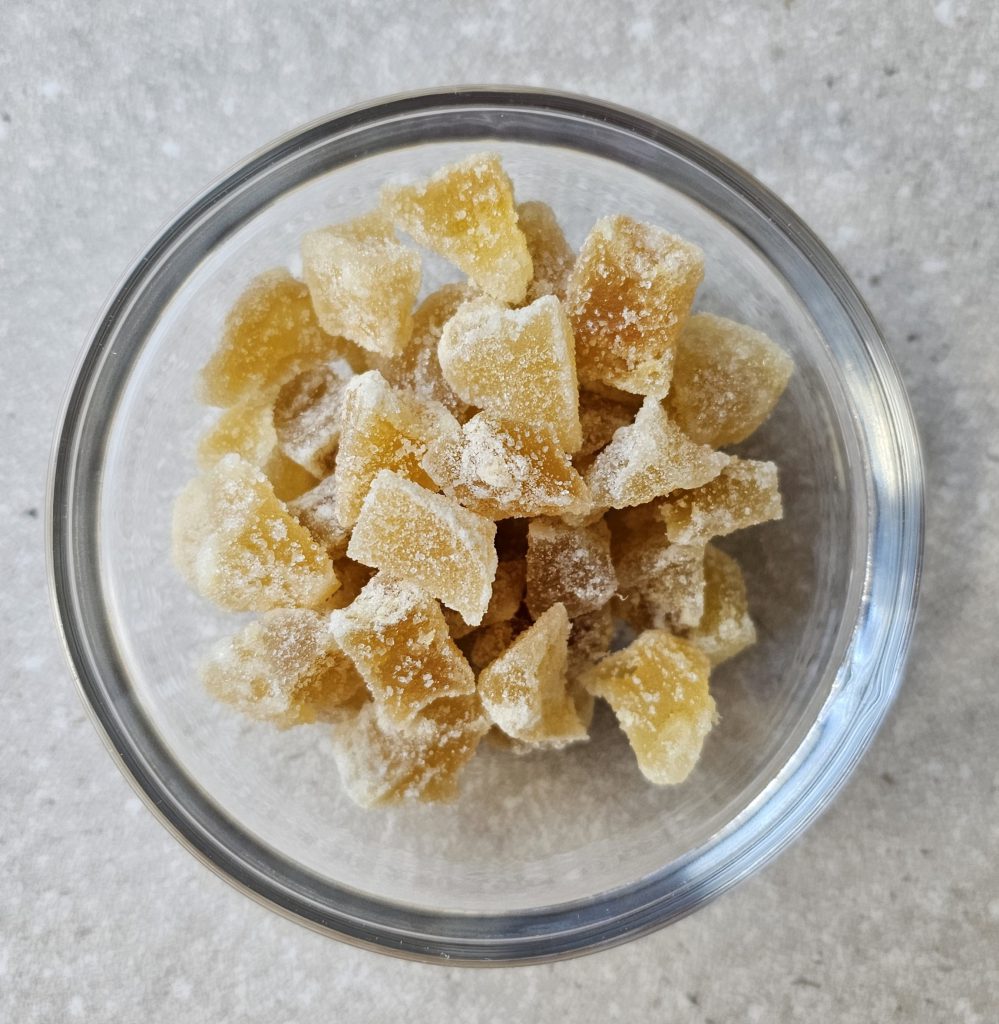
To update the recipe, I added some crystallised stem ginger, doubled the grated fresh ginger and cut the sugar elements in the cake by 60%. It was still quite sweet because of the stem ginger and the lemon icing. Instead of crystallised stem ginger it is also fine to use stem ginger that has been preserved in syrup. Either way just cut each knob of ginger into smaller pieces before adding to the cake and icing.
For a 5 cup Bundt (double the recipe for a 10 cup bundt):
8 g each of softened butter and plain flour, to line the bundt pan
75 g unsalted butter
25 g dark muscovado sugar
40 g golden syrup (I used Lyle’s brand)
40 g black treacle (I used Lyle’s brand)
2 teaspoons finely grated fresh ginger
½ teaspoon ground cinnamon
125 g milk (semi skimmed is fine)
1 large egg
½ teaspoon bicarbonate of soda dissolved in 1 tablespoon of warm water
150 g plain flour
85 g crystallised stem ginger (70 g for the cake and 15 g for the topping)
90 g icing sugar and 1½ tablespoons lemon juice for the lemon icing
You will also need a 5 cup bundt pan. The recipe can be doubled to fit a larger 10 cup pan. Nordic Ware is the only one manufacturer you should go to for these marvellous baking pans.
How to Make:
Preheat the oven to 170°C/ 150°C fan.
Brush the softened butter evenly over the entire inside of the pan, taking care to fill every corner. Sift over the flour, moving the pan around to coat evenly. Remove the excess flour by turning the pan upside down and giving it a tap (do this over a sink).
Start by sifting the flour into a large mixing bowl. Add 75 g of the cut up stem ginger. Set aside and prepare the wet ingredients.
Measure the milk and beat the egg into this. Dissolve the bicarbonate of soda in water. Set both of these aside.
Place the butter, sugar, golden syrup, treacle, ginger and cinnamon in a saucepan and melt together over a gentle heat. Do not boil the mixture.
Remove the pan from the heat and pour into the bowl with the flour. Add the milk and egg mixture, followed by the bicarbonate of soda in its water.
Mix everything together until you get a homogenous batter. Work fast as the bicarbonate of soda will react with the other ingredients, releasing bubbles which trap precious air into the batter.
Pour the cake mixture into prepared bundt pan. Level the surface and bake in the oven for 40 minutes (up to 55 minutes for the bigger pan) or until the cake bounces back when touched. A metal skewer inserted in the centre should come out clean.
Leave the cake to cool slightly in the pan before turning out onto a wire cooling rack to cool completely.
Make the icing by sifting the icing sugar into a bowl. Add the lemon juice then whisk until smooth.
Pour the icing over the cake and sprinkle over the remaining 15 g of stem ginger. The icing will stick better if the cake has cooled down a little.
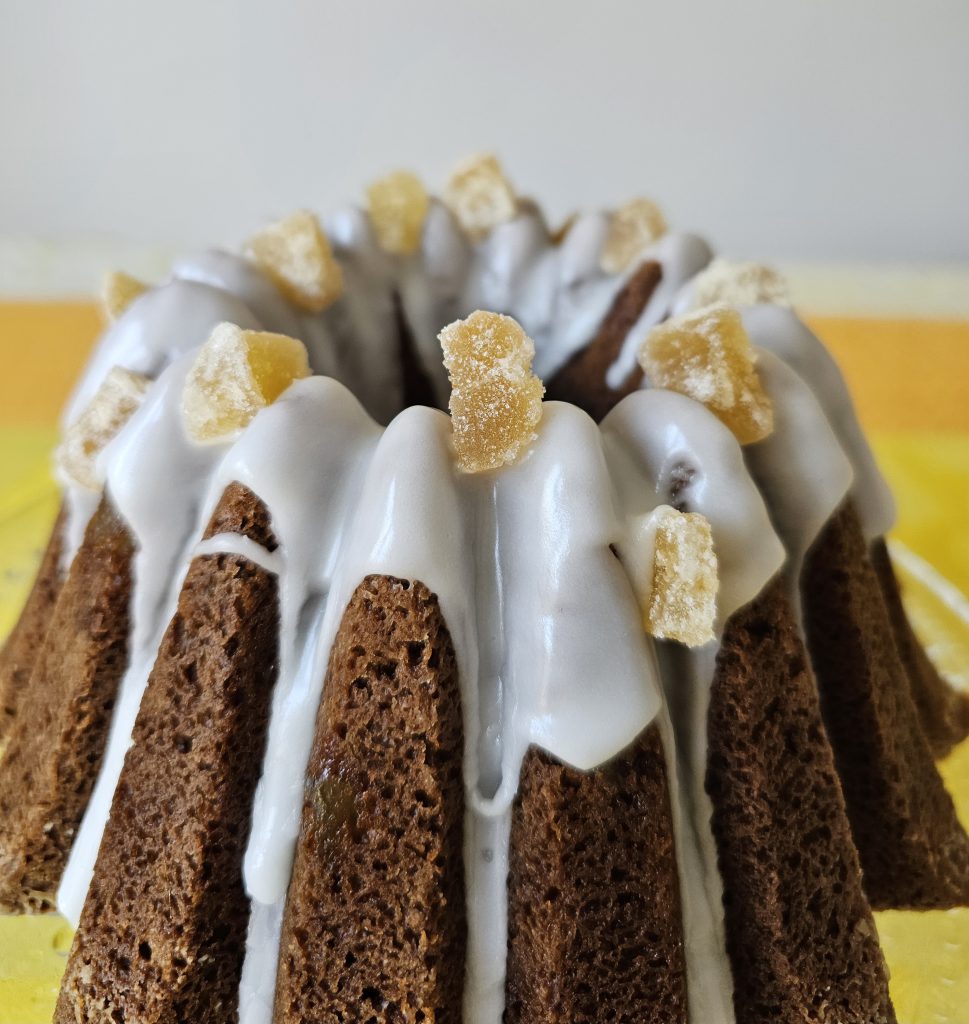
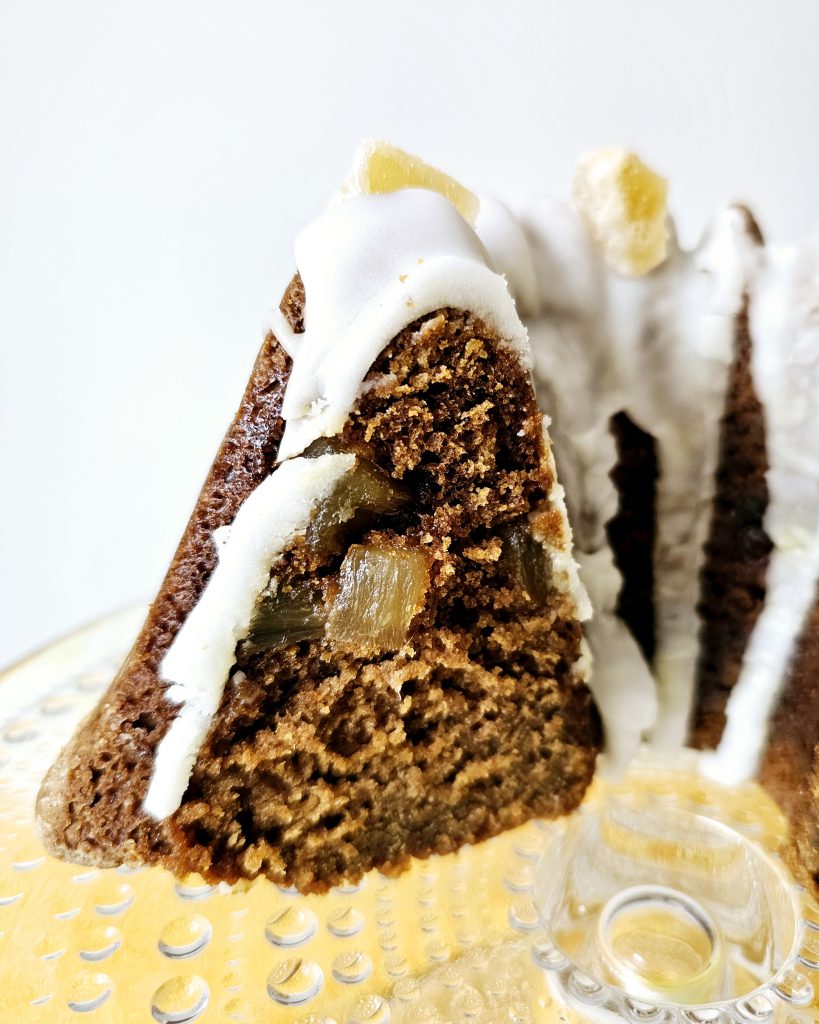
Mr Gochugaru and I loved the cake but I had a customer complaint from Junior 2. She had requested this cake as she remembered it from earlier schooldays, and so could not understand the shape, lighter colour and additional stem ginger. I had to explain that I changed the baking tin, removed 60% of the black treacle and added whole preserved ginger. She didn’t quite agree with everything but in this round of Baker vs Cake, it is the Doctor who wins hands down.
The Book:
How to be a Domestic Goddess by Nigella Lawson, published by Chatto & Windus, ISBN: 978-0701189143. You can safely cut down on the sugar in all the recipes, and still have a delicious cake at the end of the baking sessions.
One of a number of nursery rhymes the children and I used to sing together:
Pat-a-cake, pat-a-cake, baker’s man
Bake me a cake as fast as you can
Roll it, pat it, and mark it with a B
Put it in the oven for Baby and me.
How fast can you bake a cake?
In my Home Economics classes at school, I learnt the different methods of making cake batter e.g. the creaming butter and sugar method, the whisking egg and sugar method. All add air into a batter so the cake would rise and hold its shape. I understood the science behind it, but it was also time consuming.
Imagine my surprise when I first watched Nigella Lawson putting all her cake ingredients into a food processor, giving it a whizz and pouring the batter into a baking tin. How revolutionary, and contrary to everything I had been taught previously. That Ms Lawson’s cake rose and looked very edible was the start for me to see how far I can push things when pressed for time.
There is only so much you can adapt. Definitely, you cannot make a chiffon cake unless you are prepared to wait whilst the egg whites get whipped up separately. For other simpler cakes (what I call butter, eggs, sugar and flour cakes) you can pretty much use a food processor to make the batter without compromising on the quality.
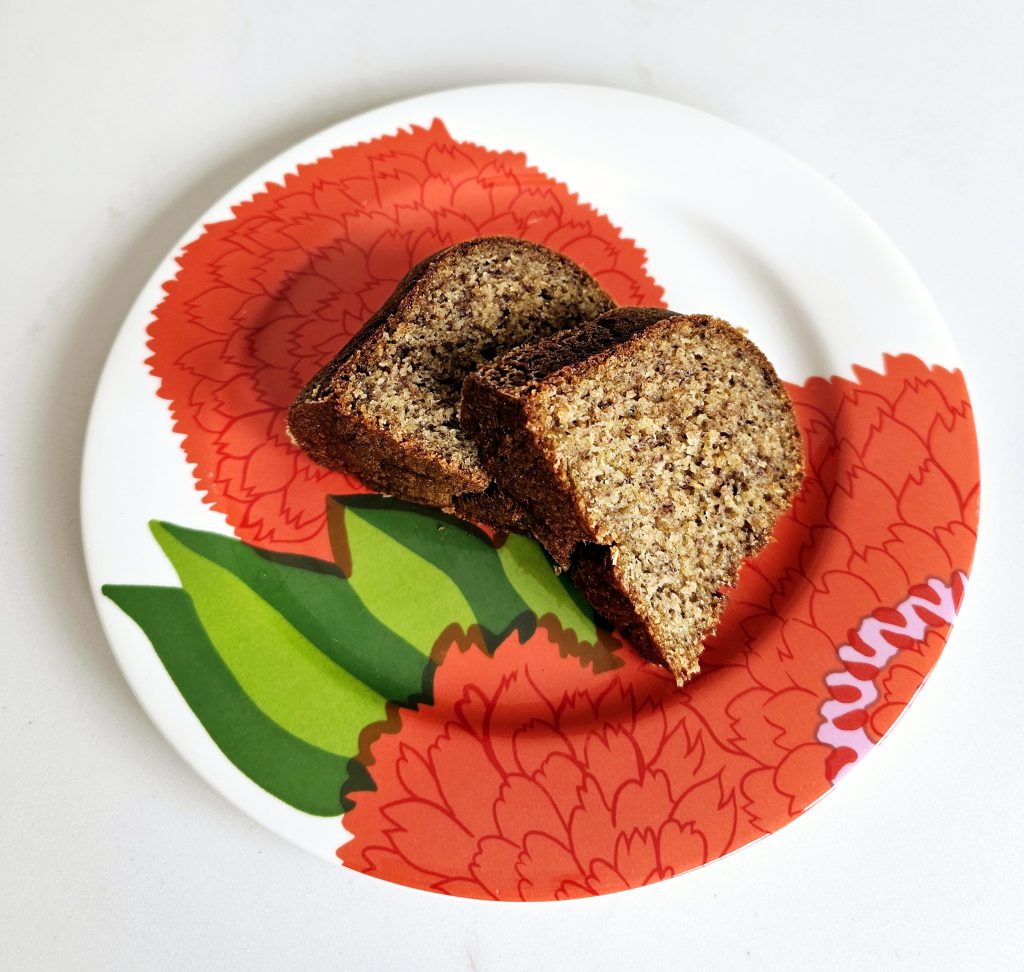
In the past few weeks I have been making batch after batch of banana cake, using different methods. I wanted something that was easy to make, looked presentable and which could also have add-ons like seeds, nuts and chocolate. I also wanted a gluten-free version for my mother-in-law.
The recipe here is what I made today, using spelt flour to up the fibre content of the cake. There is a substitution and add-ons list at the bottom of this page for ideas on how to make this cake your own.
I have always made my cakes in loaf tins or round tins. Currently I am in a bundt pan phase as their shapes make the plain cakes look so much more appealing. Here then is a banana bread recipe adapted for use in one of these shaped pans.
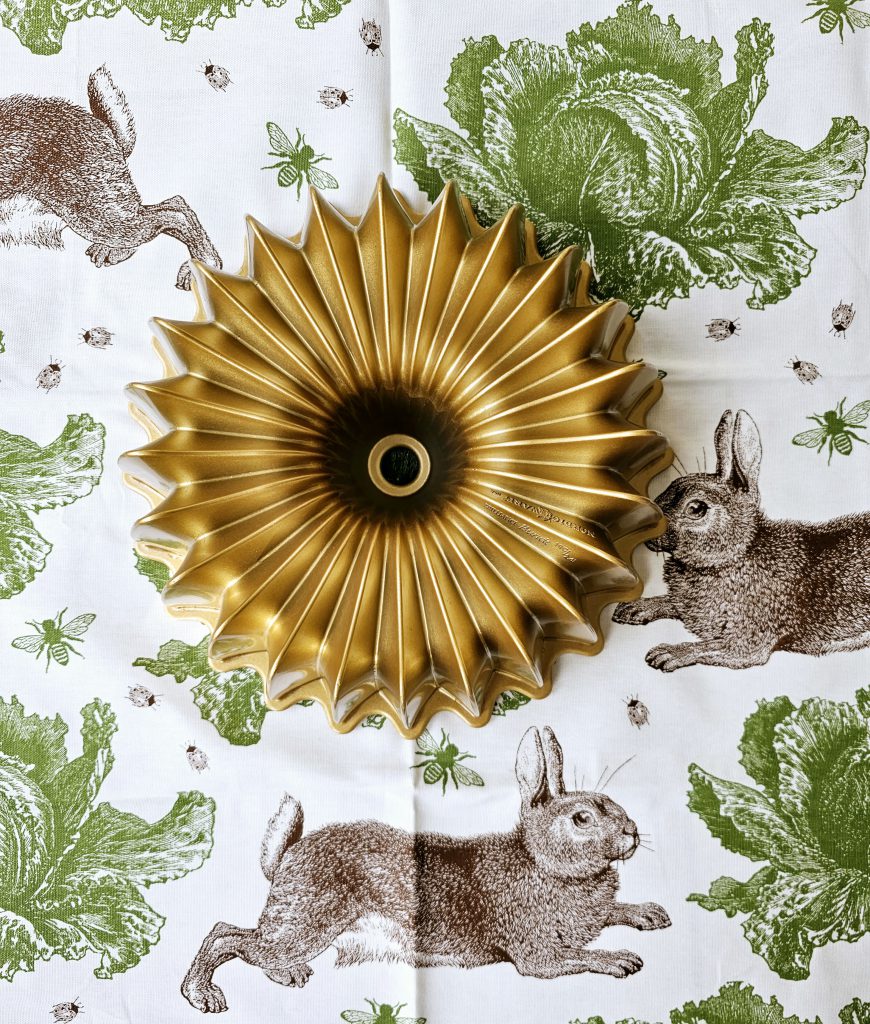
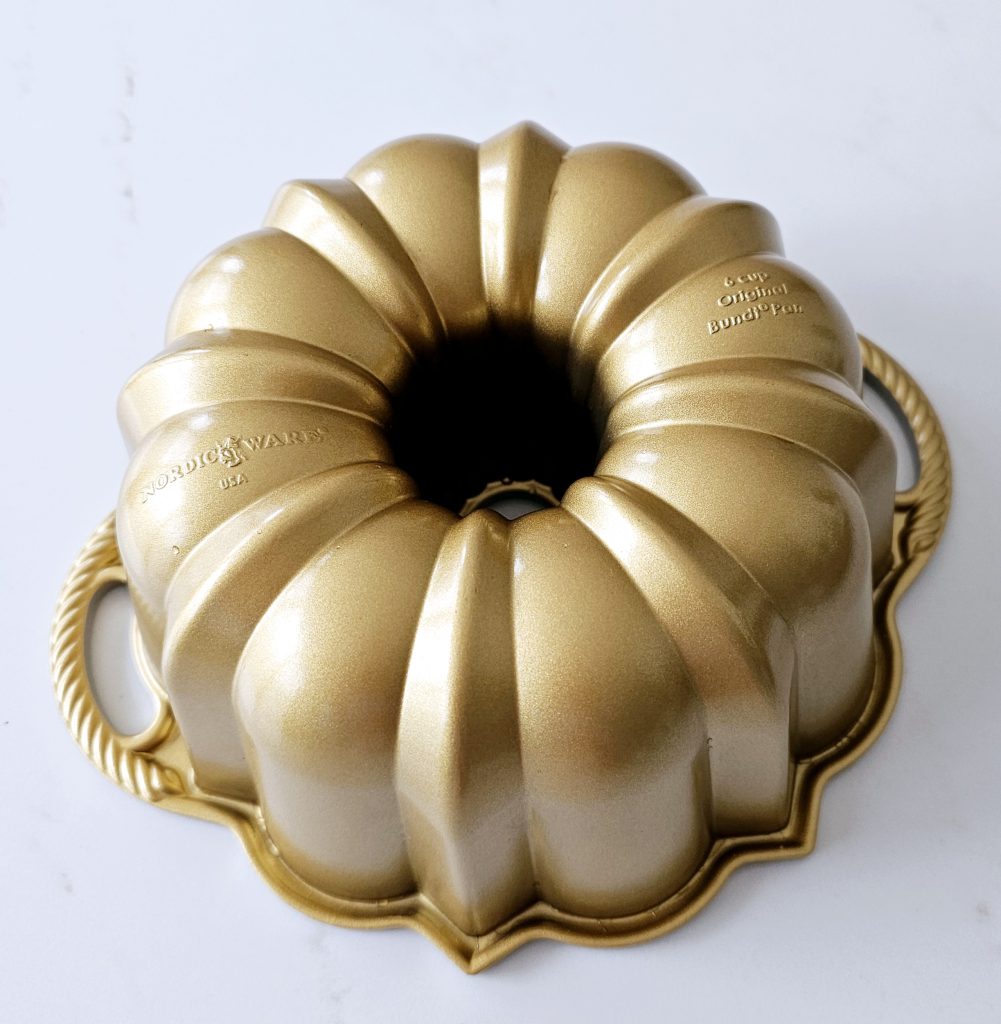
For a 6 cup bundt (see below for a 10 cup bundt)
80 g unsalted butter, very soft
80 g unrefined caster sugar
2 medium eggs (100 g without shell)
210 g ripe bananas, each cut into 4 pieces
135 g spelt flour
1¼ teaspoons baking powder
¾ teaspoon bicarbonate of soda
¼ teaspoon fine sea salt
60 g soured cream
1½ teaspoons vanilla extract
You will also need a 6 cup bundt pan. The recipe can be increased proportionately to fit a larger 10 cup pan. I used a Thermomix but you can also use a food processor. The results would be the same.
How to Make:
Preheat the oven to 170°C/ 150°C fan.
Brush 10 g of softened butter (15 g for the 10 cup bundt pan) evenly over the entire inside of the pan, taking care to fill every corner. Sift over some plain flour, moving the pan around to coat evenly. Remove the excess flour by turning the pan upside down and giving it a tap (do this over a sink).
Place the butter, sugar, eggs, banana, flour, baking powder, bicarbonate of soda, salt, soured cream and vanilla extract into the TM bowl. Mix 20 seconds/ speed 5. That’s how fast it is.
Pour the batter into the bundt pan and bake for 50 minutes (55 minutes for the 10 cup bundt) or until the cake bounces back when touched. A metal skewer inserted in the centre should come out clean.
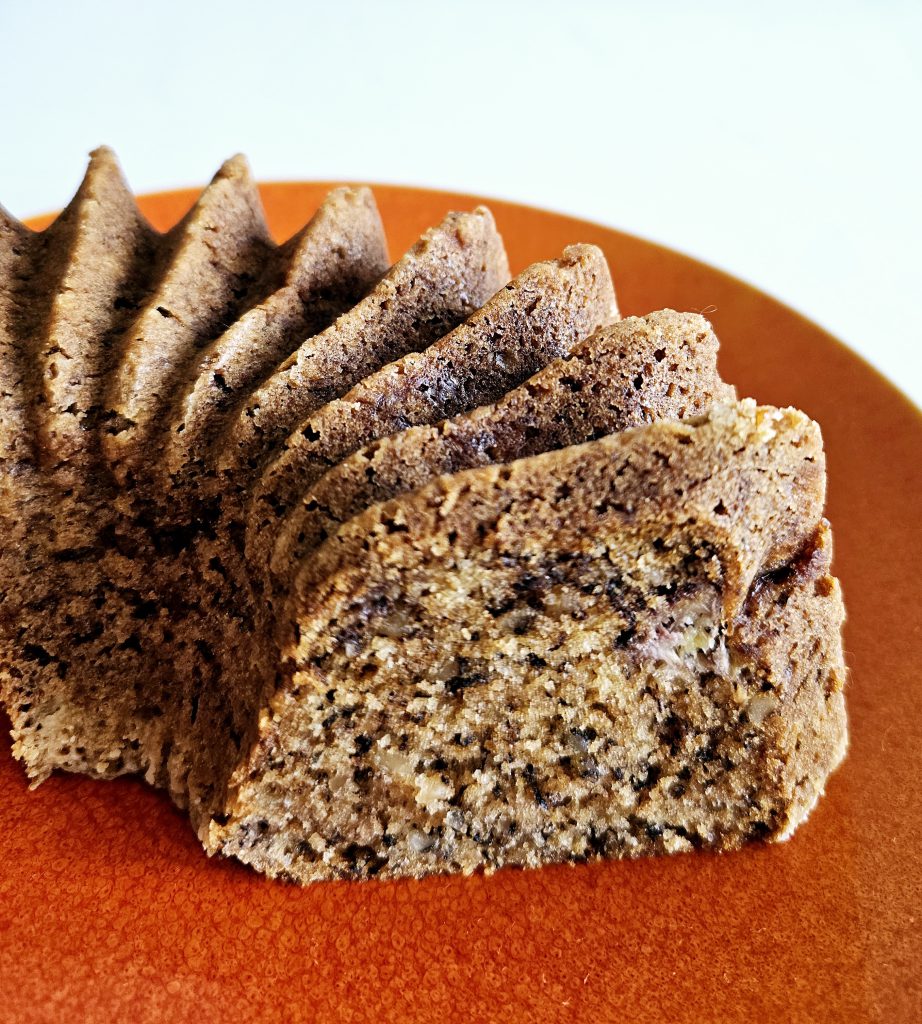
Leave the cake to cool in the pan for 15 minutes, then turn out onto a wire rack to finish cooling. Today we ate the cake warm, after a sandwich lunch. Last week we brought a few slices (walnut version) to the Cotswolds with us for a picnic tea.
10 cup bundt with walnuts
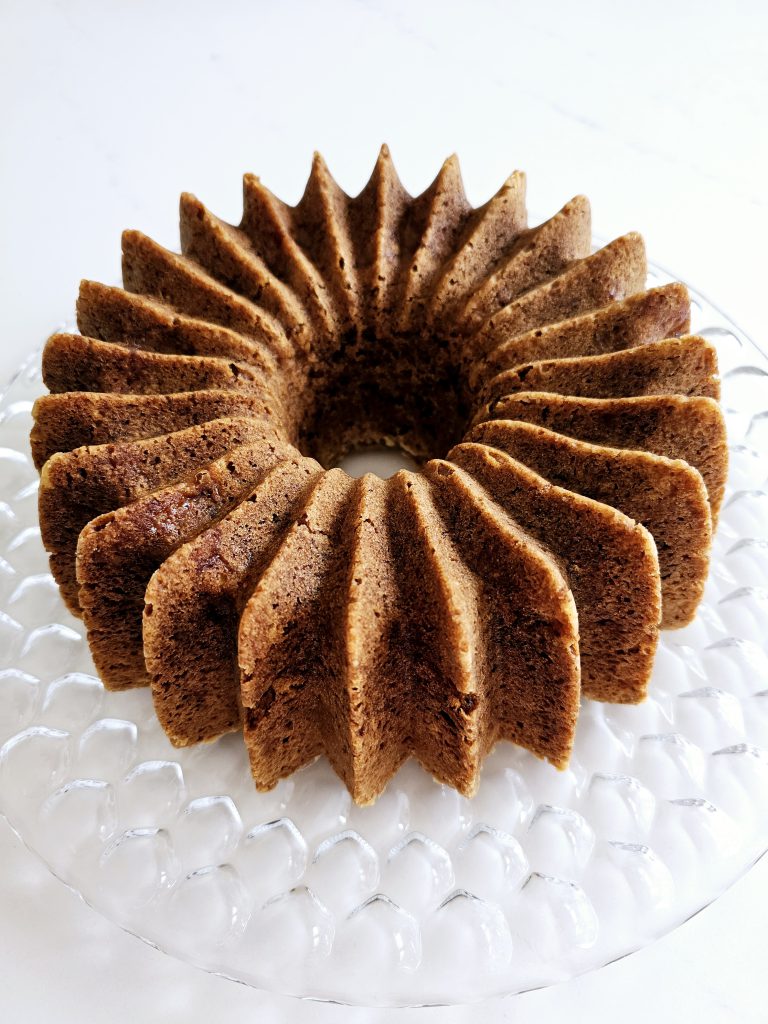
For a 10 cup bundt:
135 g unsalted butter, very soft
135 g unrefined caster sugar
3 large eggs (165 g without shell)
350 g ripe bananas, each cut into 4 pieces
225 g spelt flour
2 teaspoons baking powder
1 teaspoon bicarbonate of soda
½ teaspoon fine sea salt
100 g soured cream
2 teaspoons vanilla extract
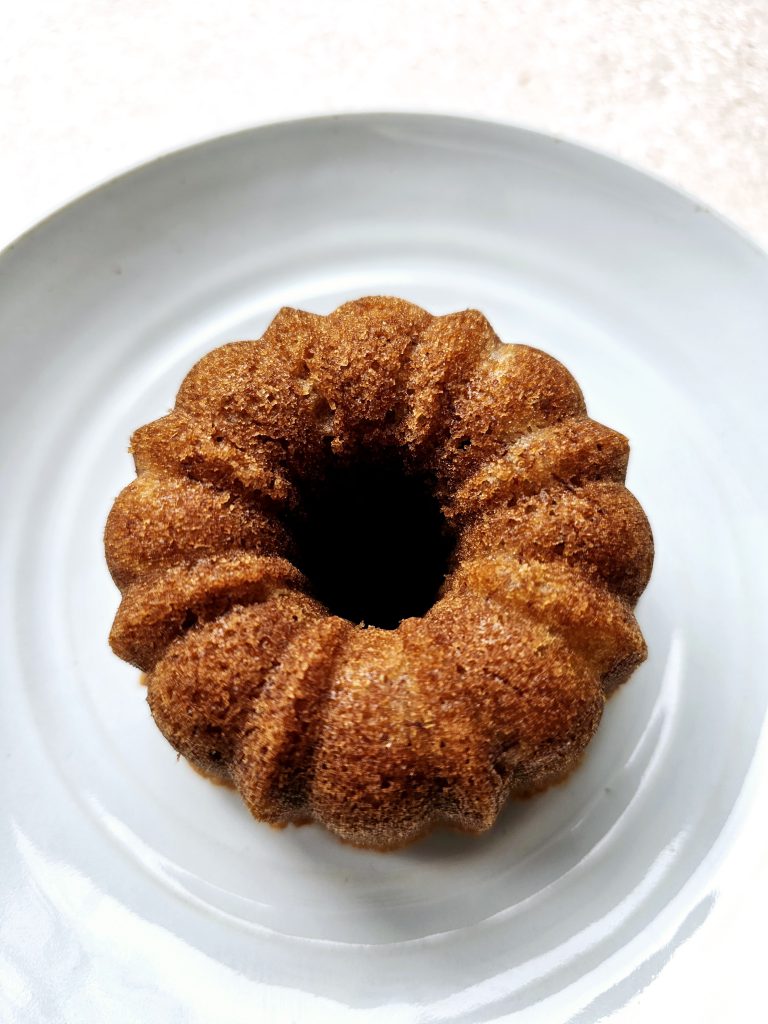
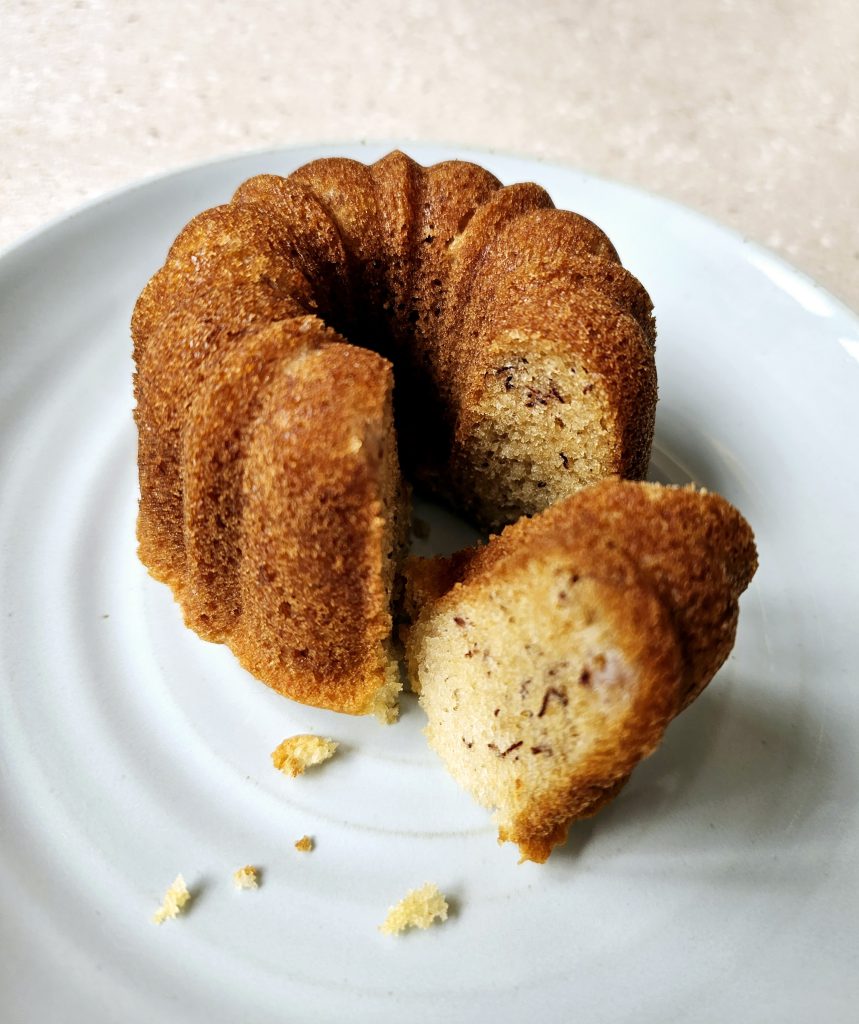
Gluten-free version, which turned out to be the most popular on account of its sponge-like texture
Substitutions and Add Ons
Instead of:
For the 6 cup bundt, add one of the following:
For the 10 cup bundt, add one of the following:
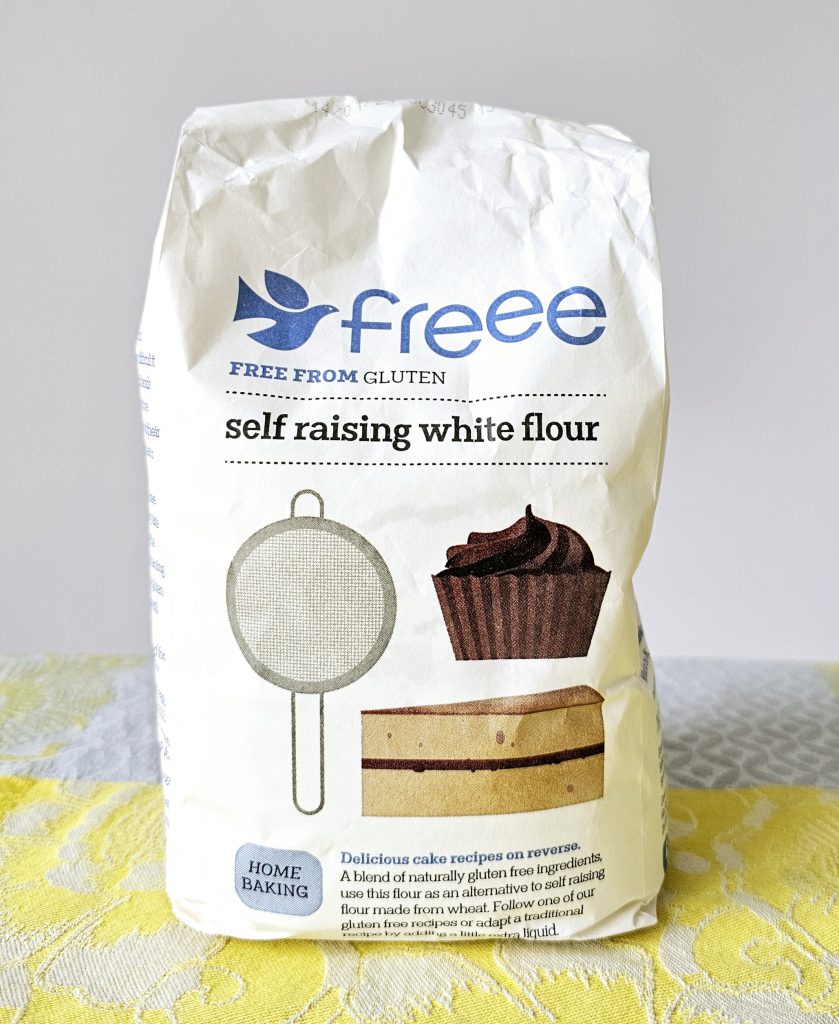
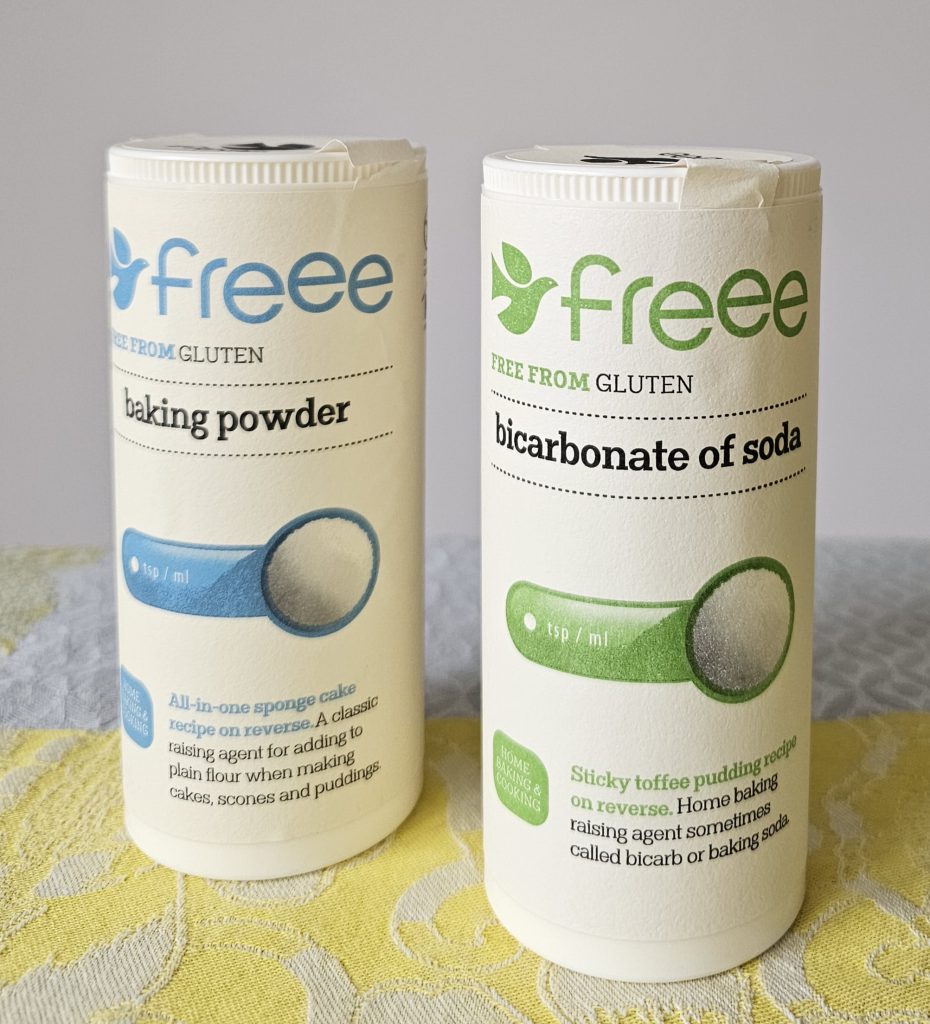
For the gluten-free version I used flour and raising agents from Freee. Here is a gluten-free banana bread recipe from Nigella Lawson
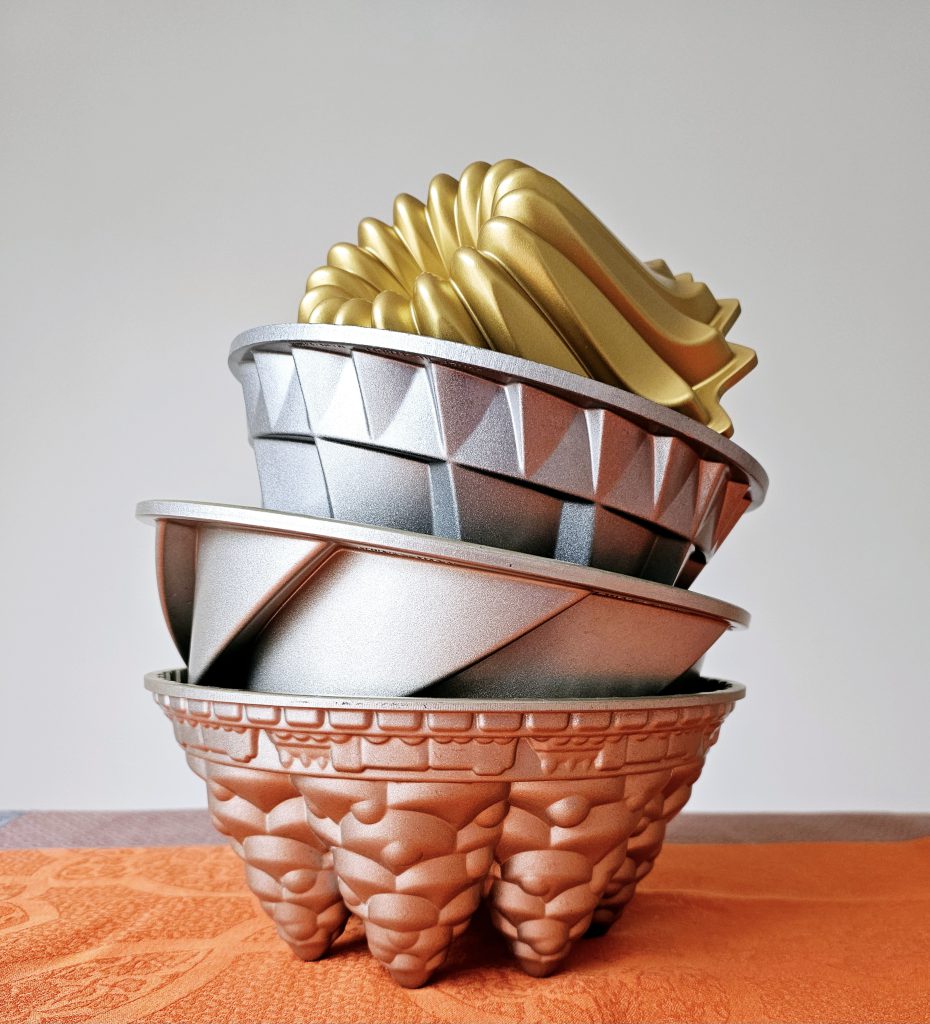
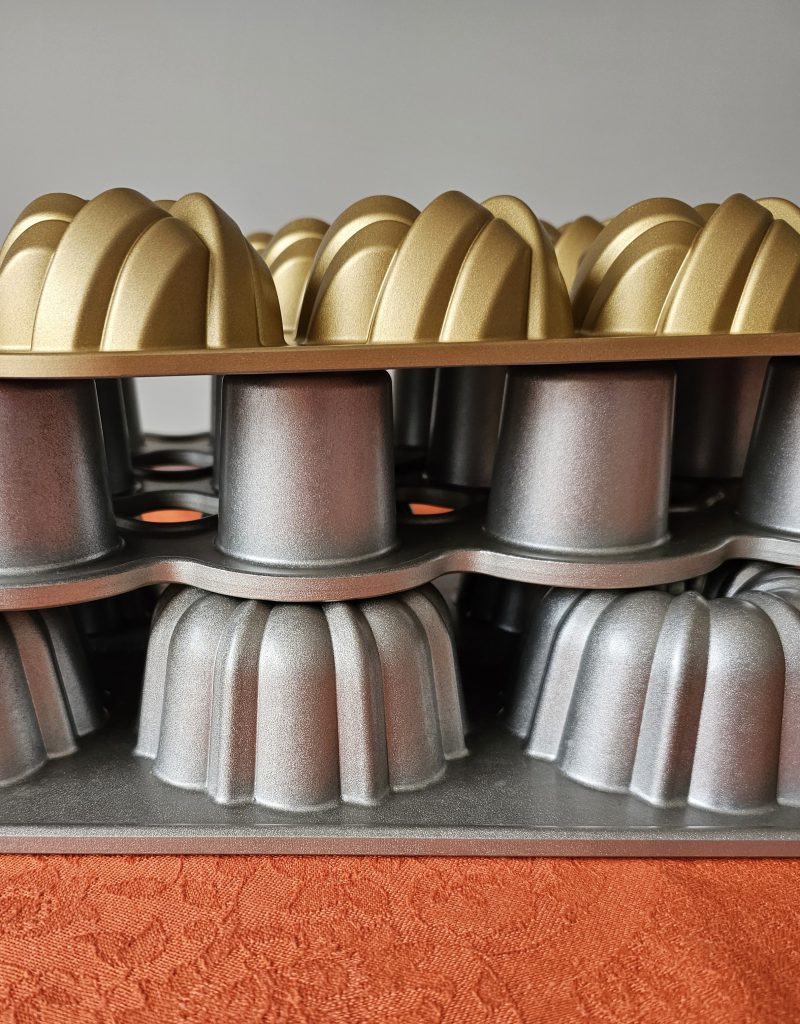
Since purchasing my Nordic Ware lotus bundt pan on our recent trip to Singapore, I renewed my interest in the existing bundt pans (and some American baking books) that I own. I then purchased a few more pans which I thought would be useful for community baking. By this I mean baking large cakes for coffee mornings at church, or for sharing with my neighbours. I am always making rectangular cakes in loaf tins which are reliable but a bit plain looking, after so many years of the same style.
I also bought a dedicated bundt baking book (simply called Bundt, by Melanie Johnson), which unfortunately promised more than it delivered. I had real issues with the recipes because I found them inconsistent and most had no accompanying photos. Some of the recipes are detailed, with three separate parts e.g. cake, glaze and frosting, or cake, filling and frosting. I had to re-read them several times and then use my most creative imagination to conjure up a picture of what a completed cake might look like. Most nights I fell asleep with exhaustion at the process. So, the book is really good if you want to fall asleep, and not so good if you want to bake a bundt.
The reason for not giving up on the book is that there are some novel ideas e.g. slicing the bundt and then filling it with flavoured cream, or topping a plain bundt with frosting. Left to my own devices a bundt will always be a plain bundt as I would rely on the fancy moulding to be the glamour factor. In fact, I still think this is the best use of a bundt pan, which is to shape an ordinary cake into something more intricate looking. Sort of like a cake corset.
My own limits on creativity
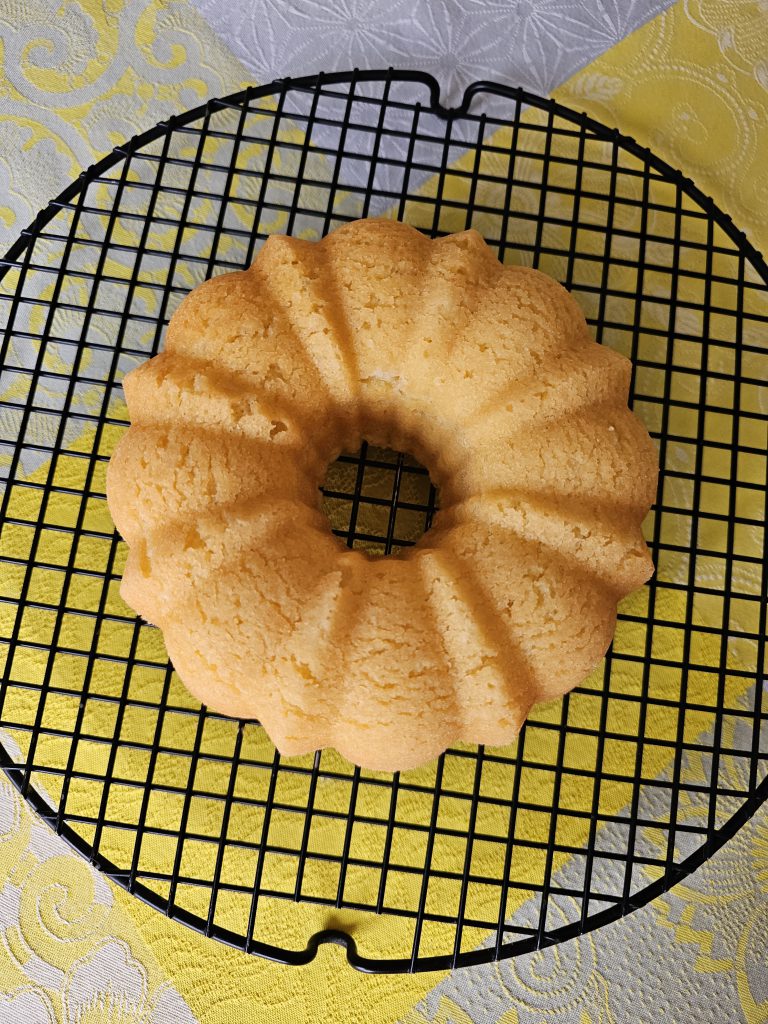
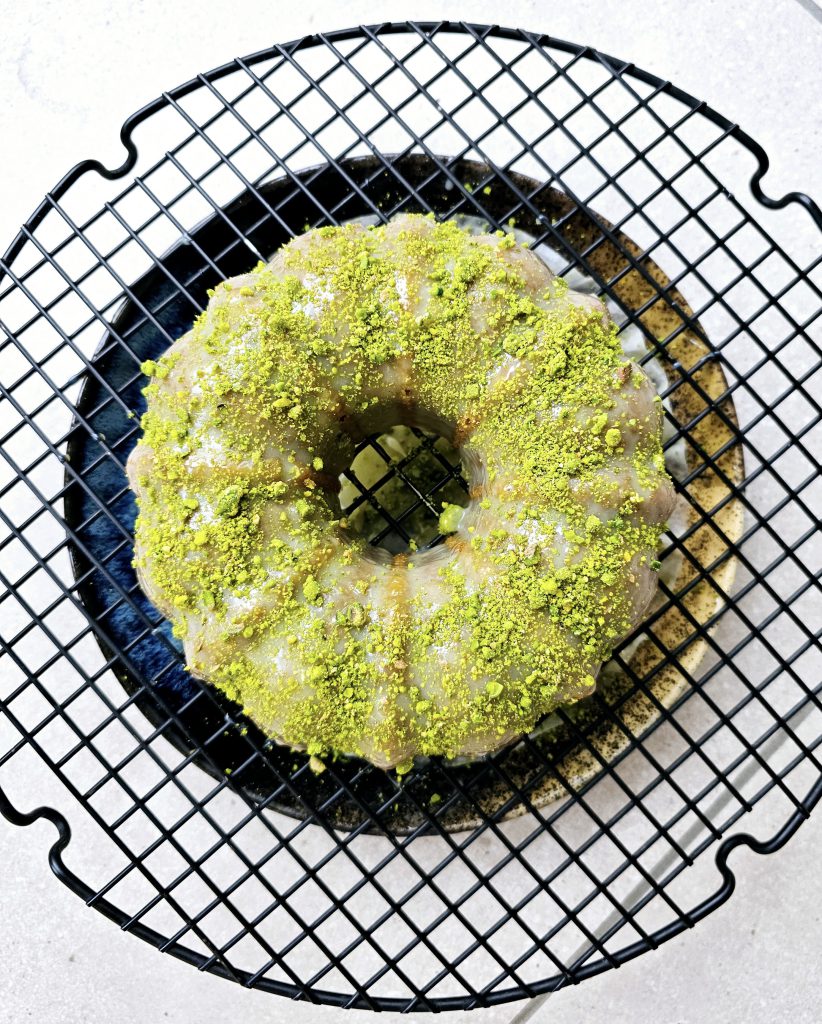
I am learning how to make my cakes look more presentable
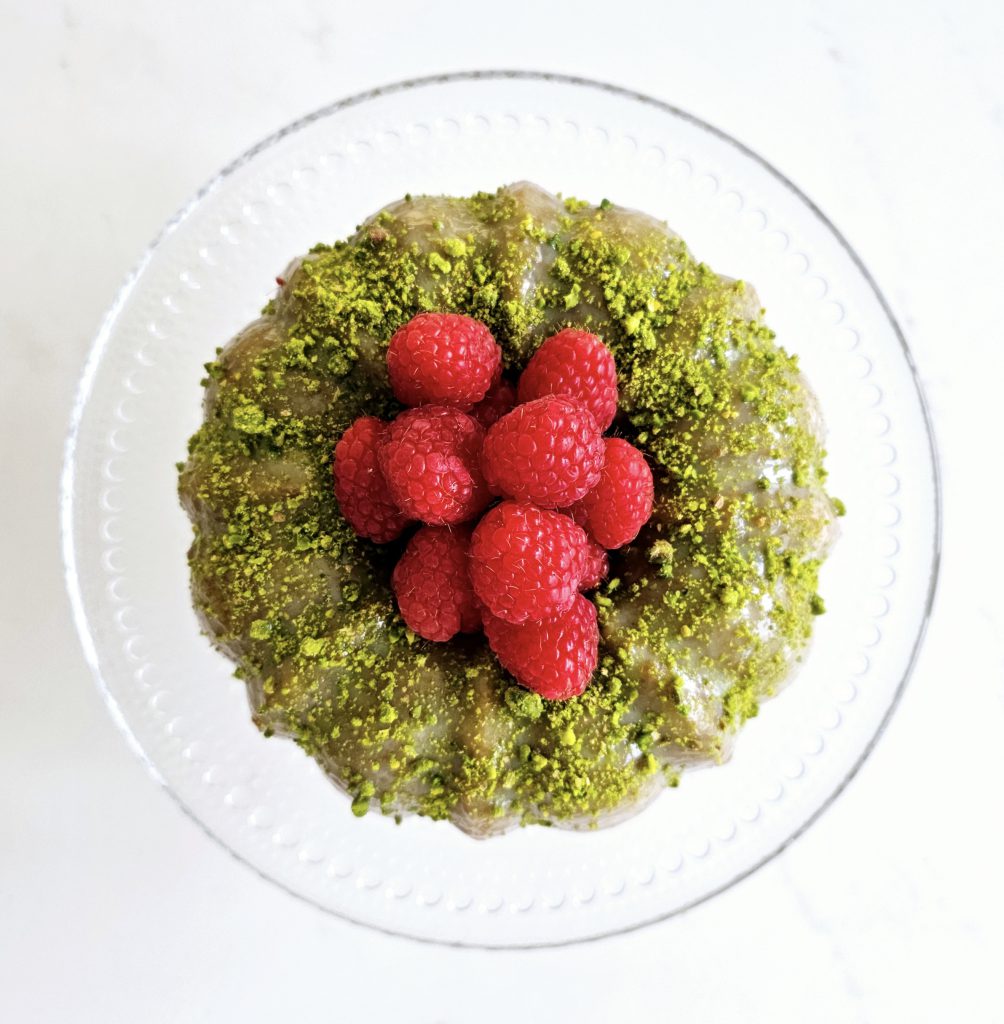
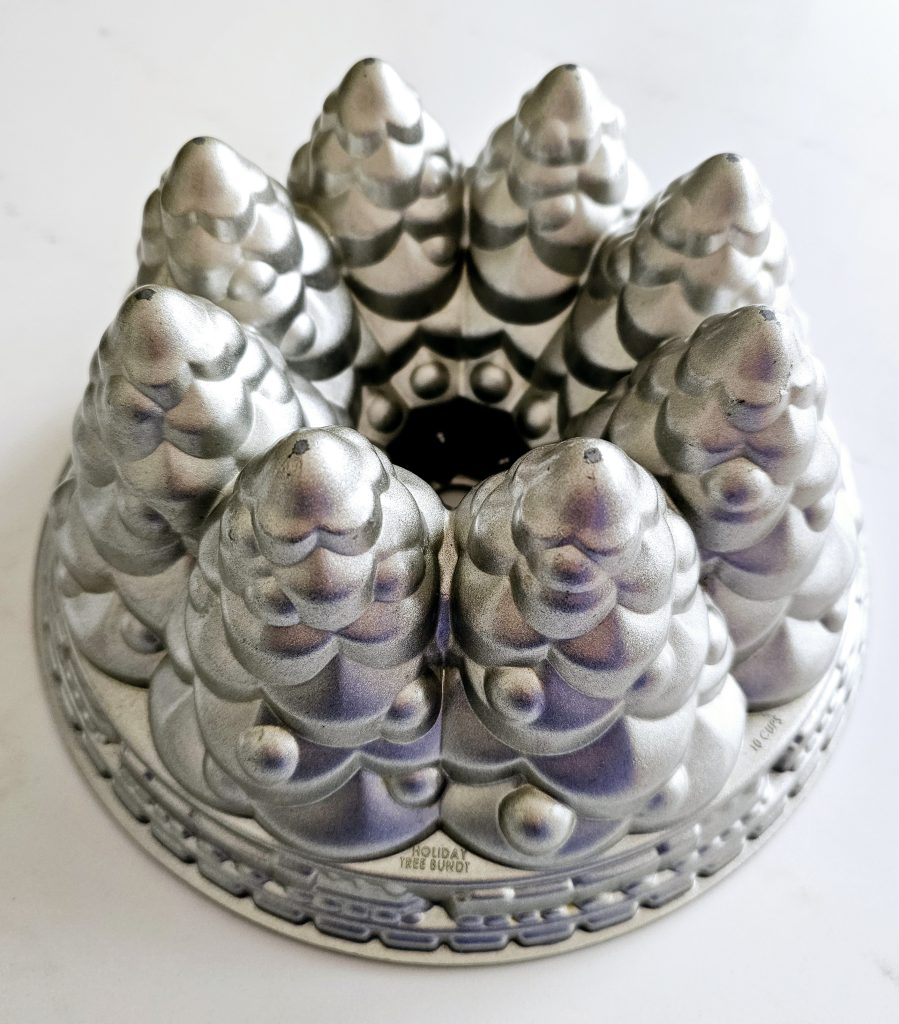
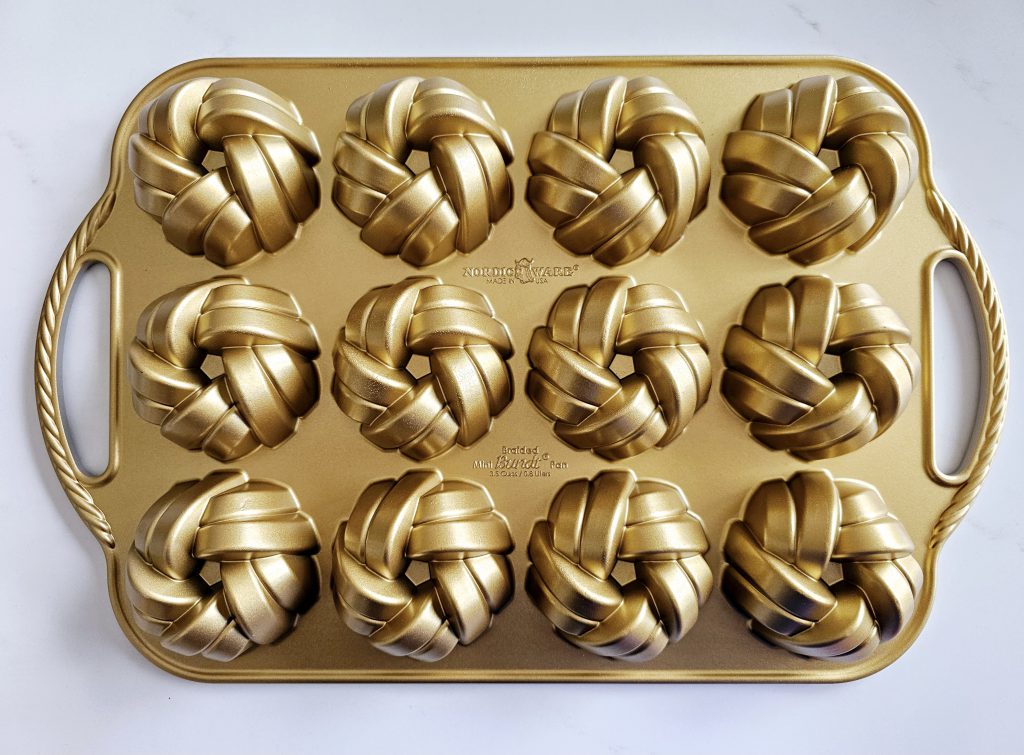
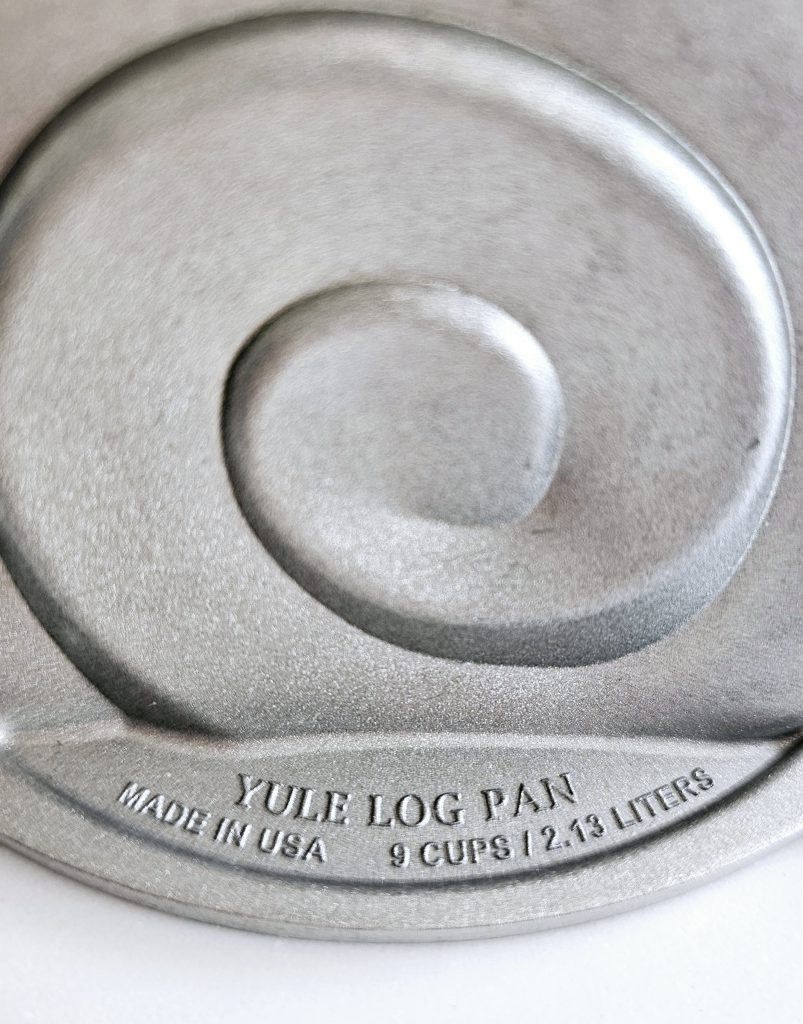
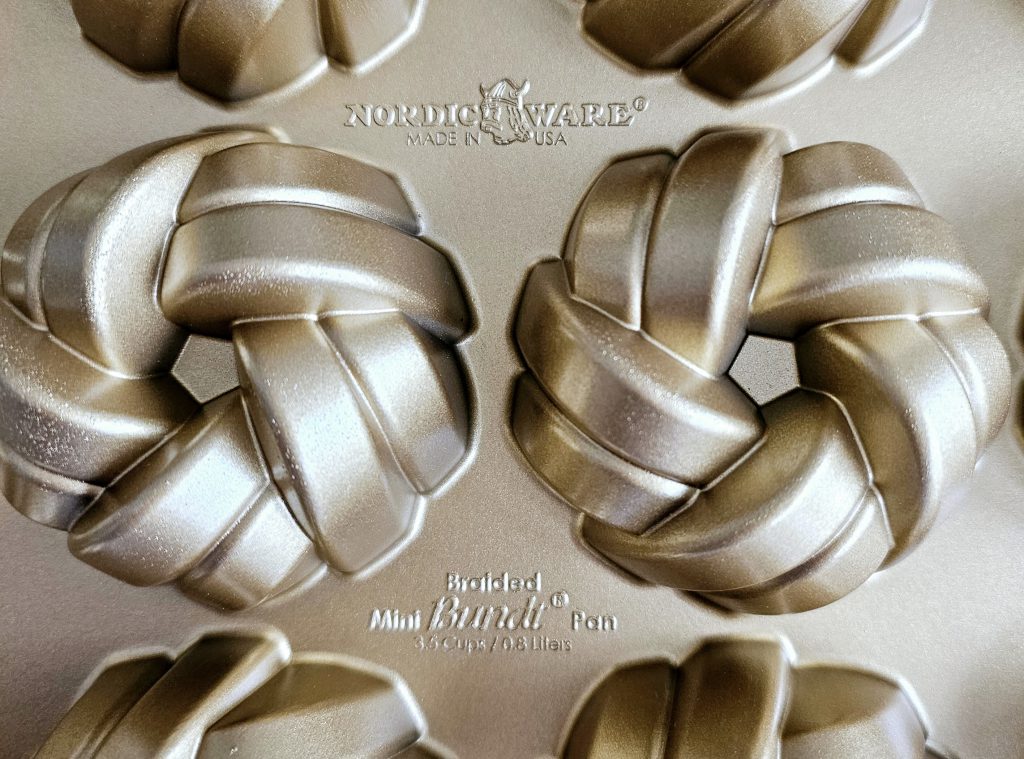
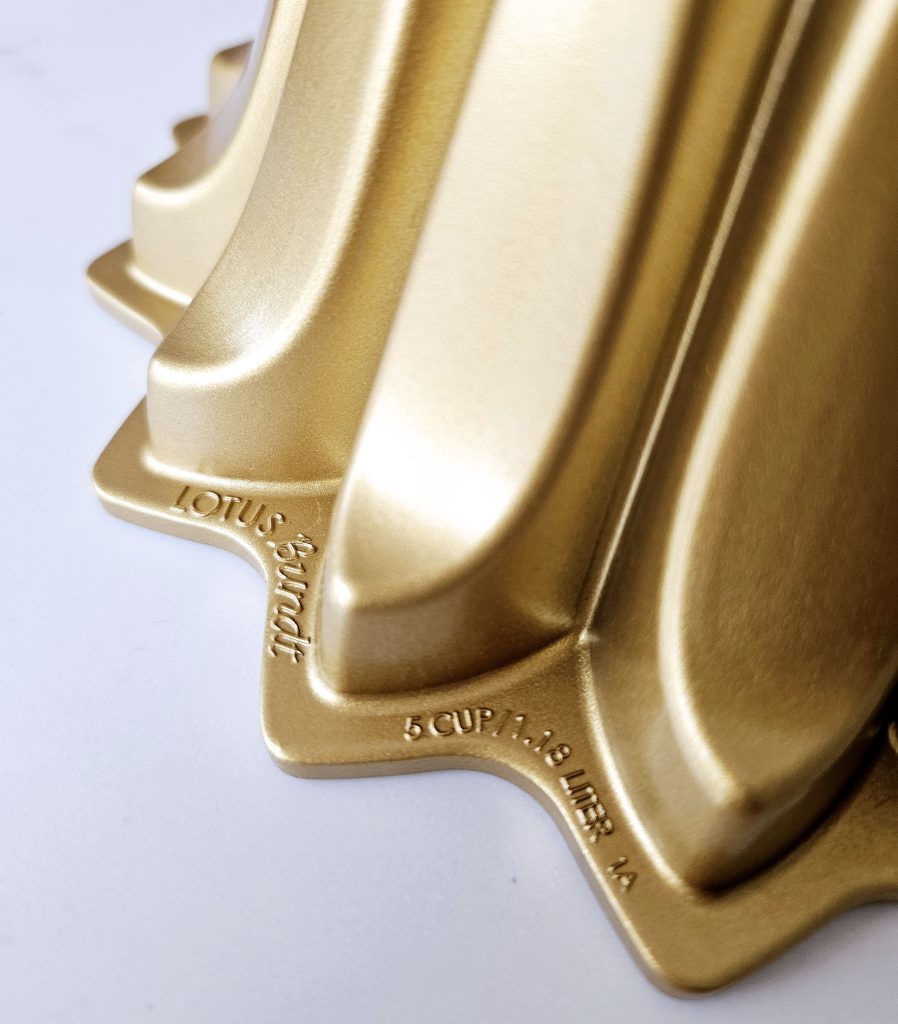
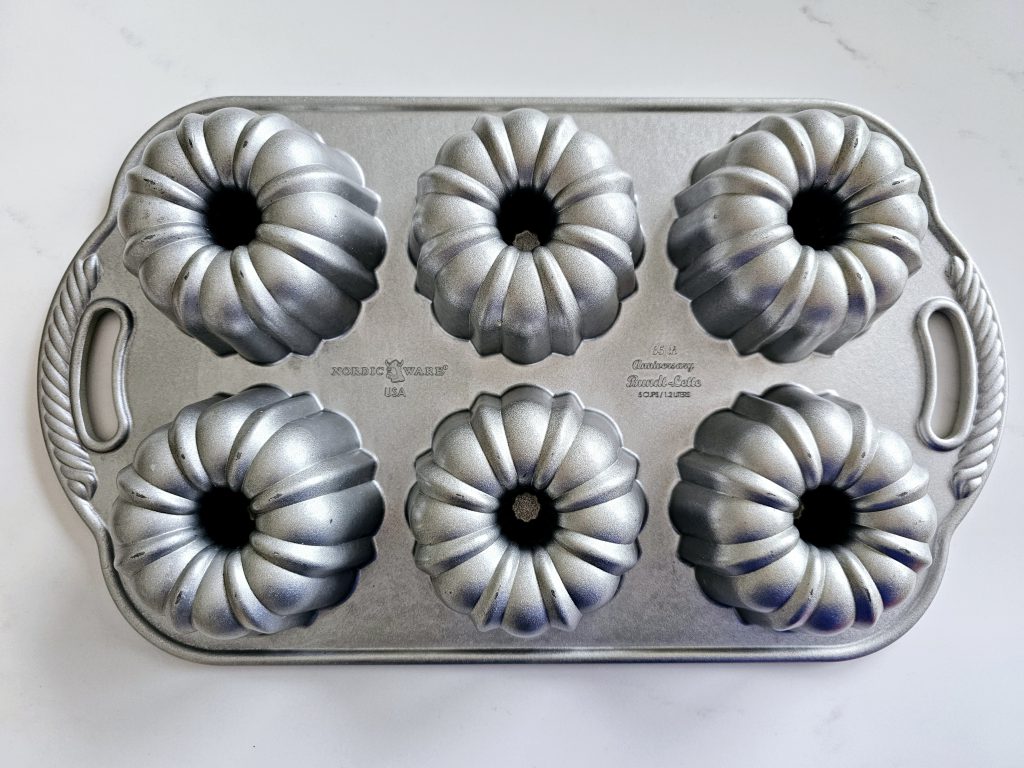
Another problem I had with the book was that the recipes varied wildly in the amount of ingredients, even when baked in similar-sized pans. All Nordic Ware pans have imprinted on them two helpful hints: the name of the pan and its volume. The volume is the amount of liquid it can hold, and not the amount of cake batter you put into it.
The varied amounts of batter used in Bundt’s recipes will yield inconsistent results using the same-size pans. Some recipes will give a taller cake which overflows the cake pan. Some recipes will make a short cake that does not reach the rim of the bundt pan, and so wasting the whole shape of the mould.
My first bundt pan, the Holiday Tree Bundt (10-cup size)
Other bundt pans showing their volume in cups
Almost all bundt cake recipes state the oven temperature as 180 C / 160 C fan. After several high-domed cakes I went back to the beginning of my baking ‘career’. What I learnt in home economics classes was that if the centre of a cake peaks or domes it means the oven temperature is too hot. Conversely if it sinks in the middle the oven temperature is too cold. I tried lowering the temperature to 170 C / 155 C fan which gave much better results. The cake rose a bit more slowly and more evenly. Baking at a lower oven temperature is possible using a bundt pan because they are so solid and conduct heat so well. I have finally settled on a 150 C fan temperature (in my Gaggenau oven) which yields the best results.
After baking another half a dozen cakes, I thought to make a standardised chart giving a basic cake recipe, to which you can add flavourings or substitute part or all of one ingredient for another. Since Nordic Ware is an American company, most bundt recipes are measured in cups. I cannot deal with cups as I like precision in baking, so I devised a spreadsheet using a basic pound cake recipe. A pound cake means you use a pound (454 g) each of flour, butter, sugar and eggs. Once you get the hang of the basic recipe, you can play with substitutions.
I have rounded up/ down the metric measurements to make it less awkward, so it is not exactly a pound cake recipe. To incorporate any additions (like vegetables, fruit, nuts, chocolate) you should use the measurements for a smaller sized pan to prevent an overflow of the batter. Sugar is always reduced in my recipes, but you can use up to the same amount as the flour and butter. Eggs vary in size all over the world so I have weighed it without the shell.
| Ingredient | Flour | Butter/ Fat | Sugar | Eggs (weight without shell) | Eggs in shell, approximately |
| Pan size | |||||
| 5 cup | 125 g | 125 g | 85 g | 100 g | 2 large |
| 6 cup | 150 g | 150 g | 100 g | 120 g | 3 medium |
| 9 cup | 225 g | 225 g | 150 g | 180 g | 4 medium |
| 10 cup | 250 g | 250 g | 170 g | 200 g | 4 large |
| 12 cup | 300 g | 300 g | 200 g | 240 g | 5 large |
One big, big tip about avoiding the disaster of a cake not turning out from the bundt pan: always make the double effort of buttering and then flouring the pan. I place the butter in the pan to soften a few hours before I start baking, or overnight, then use a stiff pastry brush to let the butter ‘get into the groove’ (remember Madonna’s advice). After that I sift about a tablespoon or two of plain flour onto the butter, moving the pan around to coat it evenly. The excess flour can be removed by turning the pan upside down and giving it a tap, which is best done over a sink.
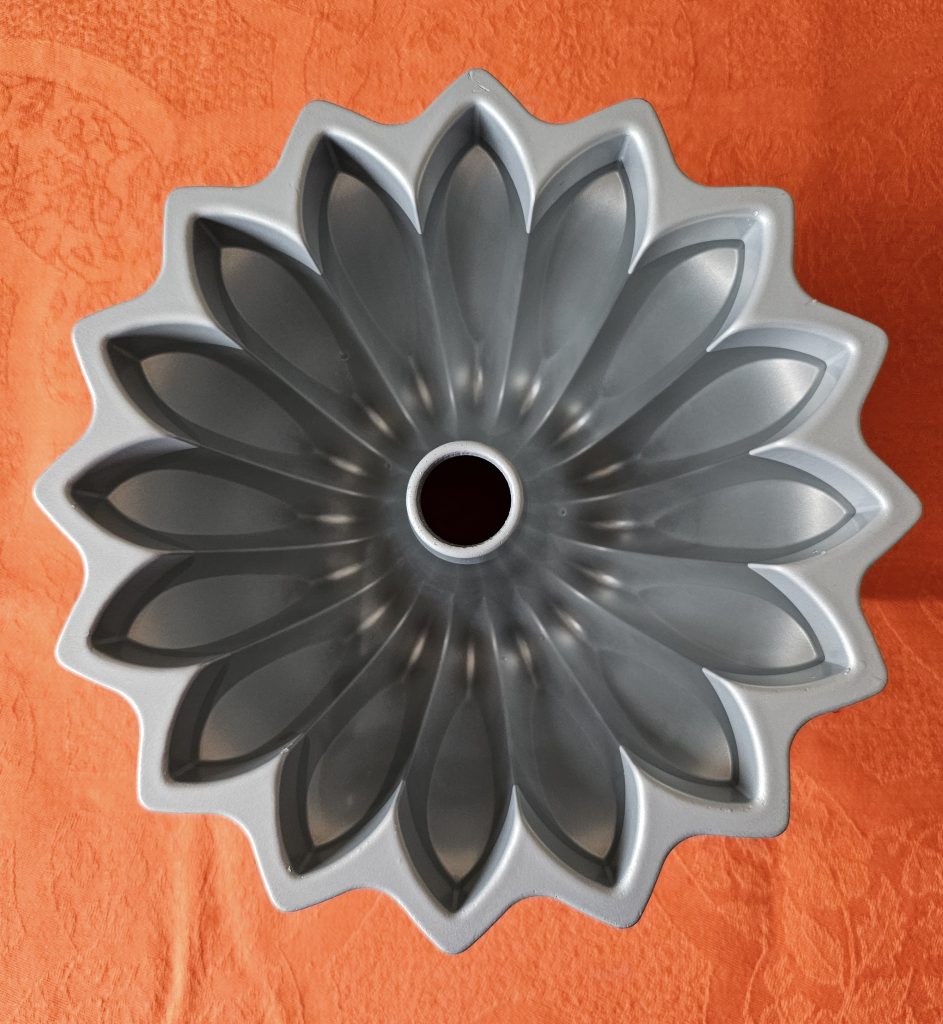
There is only one bundt pan company you should consider which is Nordic Ware. They have some recipes on their website if you want ideas. I do not maintain a bucket list, but if I did, a visit to the Nordic Ware factory in Minneapolis would feature in it.
I will share some successful bundt recipes in the next few weeks.
Some American Baking Books:
I find using American baking books tricky as almost all the recipes use cups as measurements. However there are so many ideas drawn from the cultural melting pot that makes up the USA that I find new things to bake that I had not thought of before.
Pastry Love: A Baker’s Journal of Favourite Recipes, by Joanne Chang, published by Houghton Mifflin Harcourt, ISBN 978-0544836488
Zingerman’s Bakehouse: Best-Loved Recipes for Baking People Happy, by Amy Emberling and Frank Carollo, published by Chronicle Books, ISBN 978-1452156583
The Good Book of Southern Baking: A Revival of Biscuits, Cakes, and Cornbread, by Kelly Fields with Kate Heddings, published by Lorena Jones Books, ISBN 978-1984856227