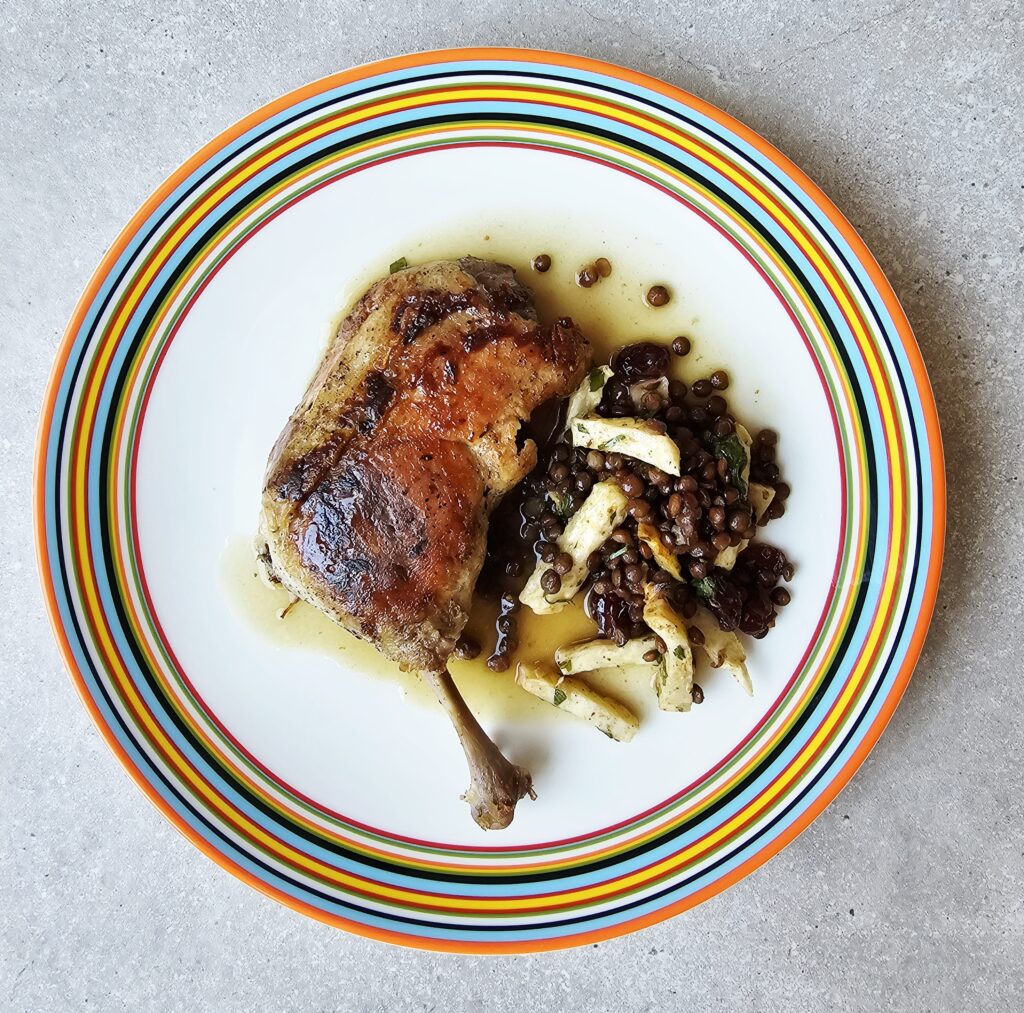
The children always have interesting projects, and recently this took the form of sous vide leg of lamb (utterly delicious) and sous vide confit duck legs. I had some enthusiasm for sous vide cooking a few years back but did not use my Anova sous vide immersion circulator much. Sous vide steak was very good, however we found the texture of the sous vide chicken breasts too slimy for our liking. That first immersion circulator was passed on to Junior 3.
But then I made these very nice duck legs with minimal fuss and effort (borrowing Junior 1’s immersion circulator) and thus reviving my dormant enthusiasm for sous vide cooking. Anova has a sale on and I now have their smallest model, suitable for cooking 1 – 4 portions. This is an older model with a fixed clip which I actually prefer as there is one less item to adjust and store.
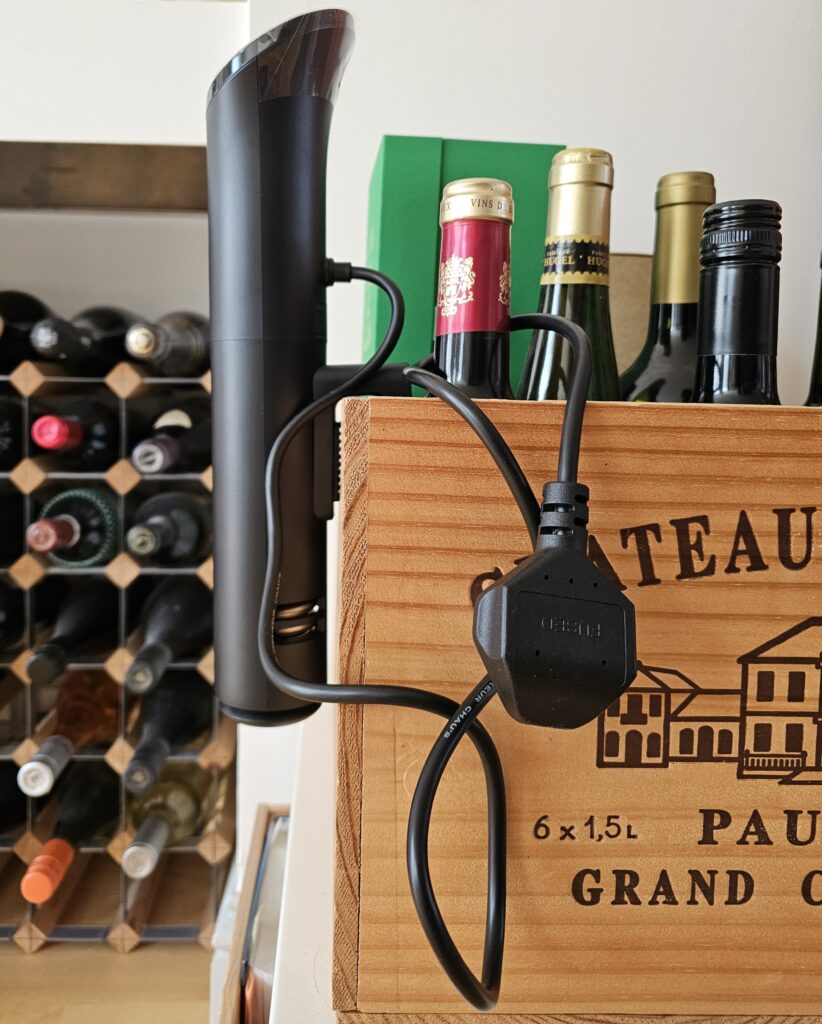
My starting point for these duck legs was this article from Serious Eats. I then read other online recipes and finally followed Junior 1’s method of cooking it at 80 C for 8 hours. I made six duck legs: two each to eat, freeze and give away.
Previously I had a dedicated large plastic tub with a cover in which to sous vide bagged items but that was given away. This time I used my largest pot with two layers of cling film as a cover to help prevent too much evaporation. I did retain my bag sealer and am glad I did so.
For the Duck Legs:
6 duck legs
Fine sea salt and freshly ground black pepper
6 large cloves garlic, minced or left whole
6 sprigs fresh thyme
You will also need a sous vide immersion circulator and a large pot with a suitably-sized cover.
How to Make:
(the long and the short of it is this: season. seal, sous vide)
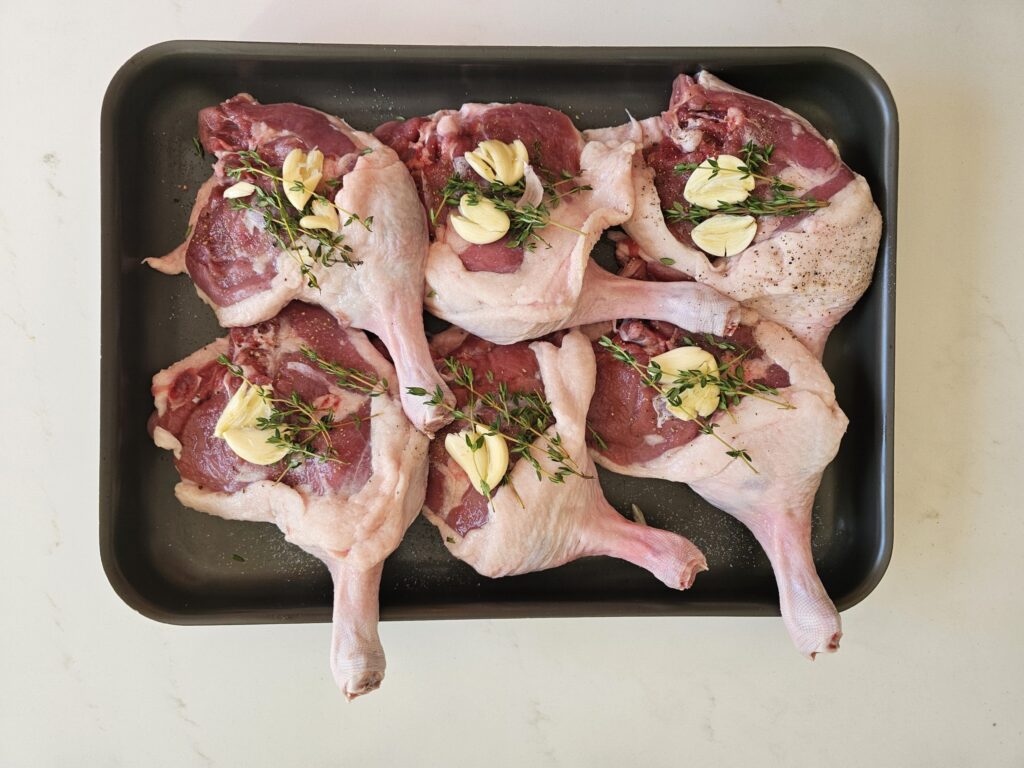
Wipe the moisture off the duck legs with some paper towels and remove any remaining stubble from the skin.
Season the duck legs all over with salt and pepper.
Rub the garlic onto the underside of each leg and place a thyme sprig on top. The reason for this is purely aesthetic, as the garlic and thyme will make an indentation in the skin (when shrink-wrapped for cooking) and you might prefer a smooth top for serving.
Slide the duck legs into vacuum bags and seal according to the vacuum sealer instructions. You can bag them individually or two at a time. It depends on the size of your bag, your pot and how many people you wish to feed.
Alternatively, seal the duck legs in a zipper-lock bag using the water displacement method when you are ready to start cooking.
If you have the time, store the sealed duck legs in your fridge overnight. If I had the shelf space I would prefer to leave the seasoned but unbagged duck legs to air dry overnight on a tray, as I found that wiping them did not remove all the moisture.
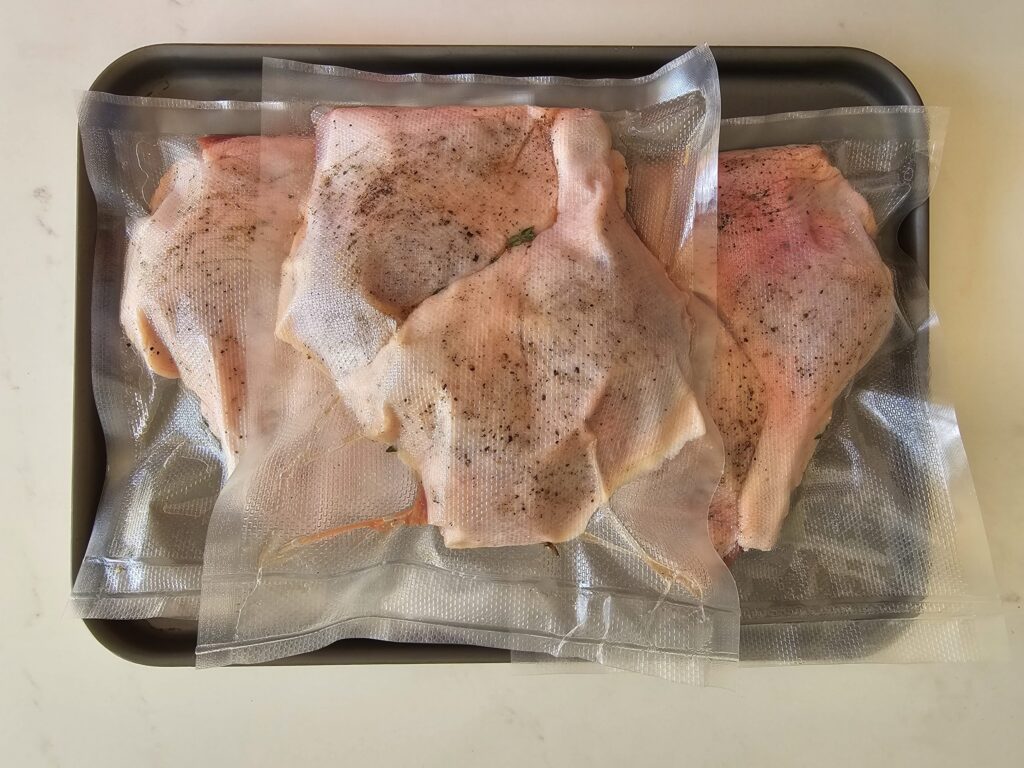
When you are ready to cook the duck legs, preheat the water bath to 80 C.
Lower the sealed duck into the water bath slowly. You may need to press it down (use a small plate or a wet tea towel folded in half) if it floats above the water line. Cook for eight hours.
Make sure to a) top up the water occasionally, b) check that the bag continues to be submerged and c) set the timer for the finishing time.
Remove the duck legs from the water bath, cool rapidly in a tub of cold water and transfer to the refrigerator to finish chilling. The duck can be kept refrigerated within the sealed bag for up to 1 week. If you are not using it soon, consider giving some to a friend (they will thank you for it!) or freeze them.
When you are ready to cook, remove the duck legs from the bag and scrape away the thyme sprigs, garlic and excess fat and juices.
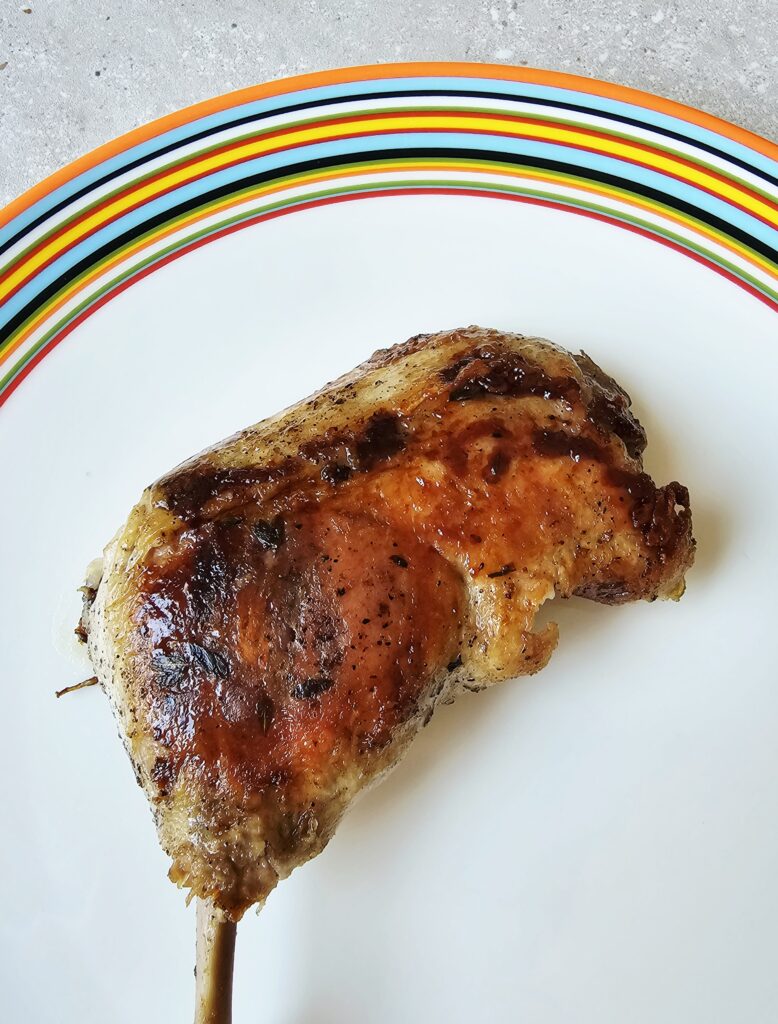
Heat the duck fat in a non-stick pan, add the duck legs and fry over a medium heat until the meat is heated through and the skin is browned and crispy. Remove the duck on to a plate and pour the juices into the pan, swirling around to heat and make a thin gravy.
The duck can also be cooked in an oven heated to 180 C fan/ 200 C electric, or grilled under a medium grill, and again with both methods cook until the meat is heated through and the skin is browned and crispy.
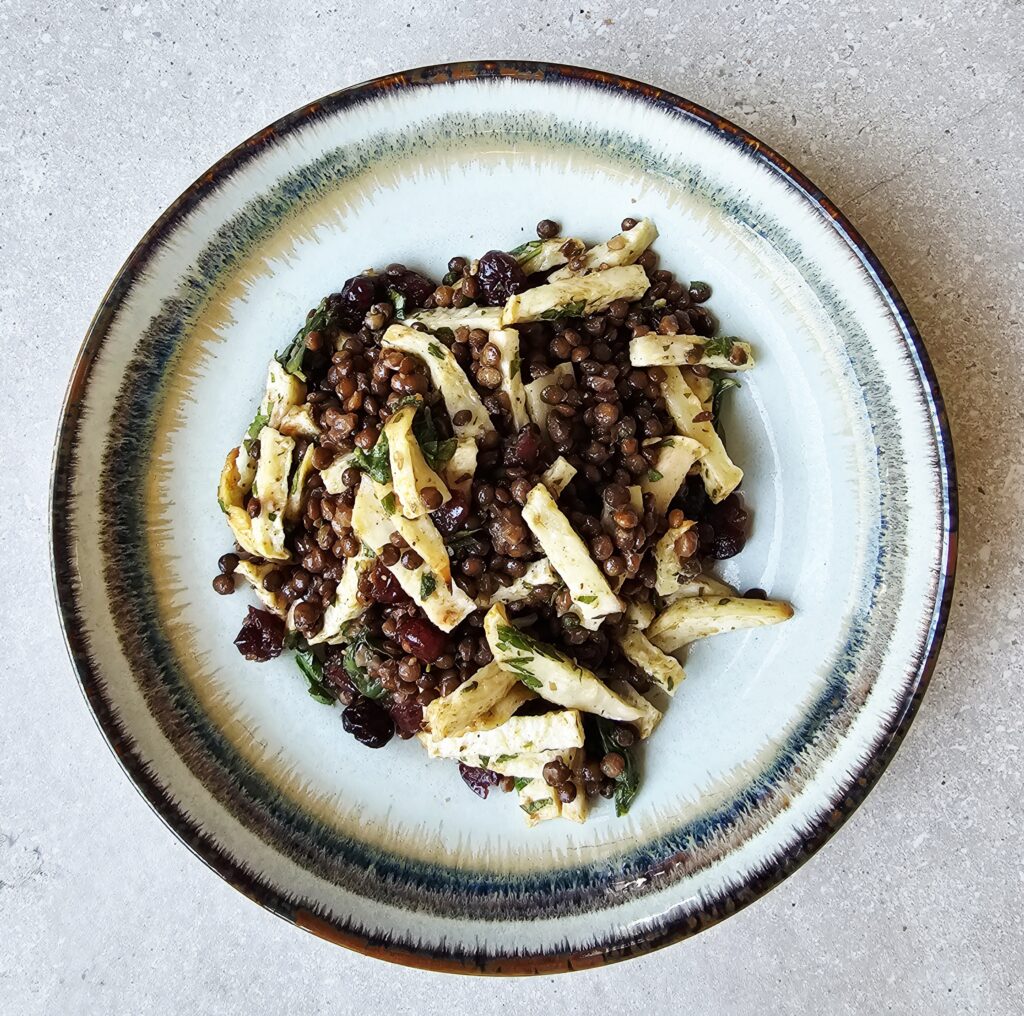
We ate the duck with a celeriac and green lentil salad
For a comparison on sous vide immersion circulators see this article from Serious Eats.
For the low down on cooking in plastic bags (as in sous vide) read here.
The only thing that could have made the duck better would be if my dad were still around to share it with us. He loved duck in all its forms and we ate a lot during his visits to London in Summer. We bought many tins of confit de canard when we were in the Perigord region of France. I am grandmother now and I fully intend to introduce this delightful dish to our grandchildren V+S when they have strong enough teeth to chew through the duck meat, accompanied by crispy cubed potatoes fried with chopped garlic and parsley then seasoned with a sprinkling of sea salt flakes.